

A battery energy storage system captures electricity—from the grid or a renewable source—and holds it in rechargeable batteries until power is needed. As peak tariffs rise and renewable capacity expands, more commercial and industrial operators are treating BESS as a core infrastructure asset, not just emergency backup. This article explains how the charge-discharge cycle works, what each major component does, and which specifications matter most when evaluating a system.
What a Battery Energy Storage System Is
A battery energy storage system (BESS) is an assembly of rechargeable battery cells, power electronics, and control software that stores electrical energy and releases it on demand. At its core, a battery is a direct current (DC) device: it holds energy in chemical form and converts it back to electrical current during discharge. A power conversion system (PCS) then transforms that DC output into the alternating current (AC) that grids, buildings, and industrial equipment use.
The distinction from a conventional UPS is not just scale.
A UPS bridges a power gap for seconds or minutes—long enough to protect servers until a generator starts. A BESS stores and dispatches energy over hours, with response times under 150 milliseconds and discharge durations ranging from 30 minutes to eight hours or more, depending on the chemistry and configuration. The applications are fundamentally different.
How the Charge-Discharge Cycle Works
Every battery energy storage system operates on the same electrochemical principle: electrical energy converts into chemical energy during charging and converts back during discharge. What varies between systems is how fast that conversion happens and how much energy moves in each direction.
Charging — From Source to Battery
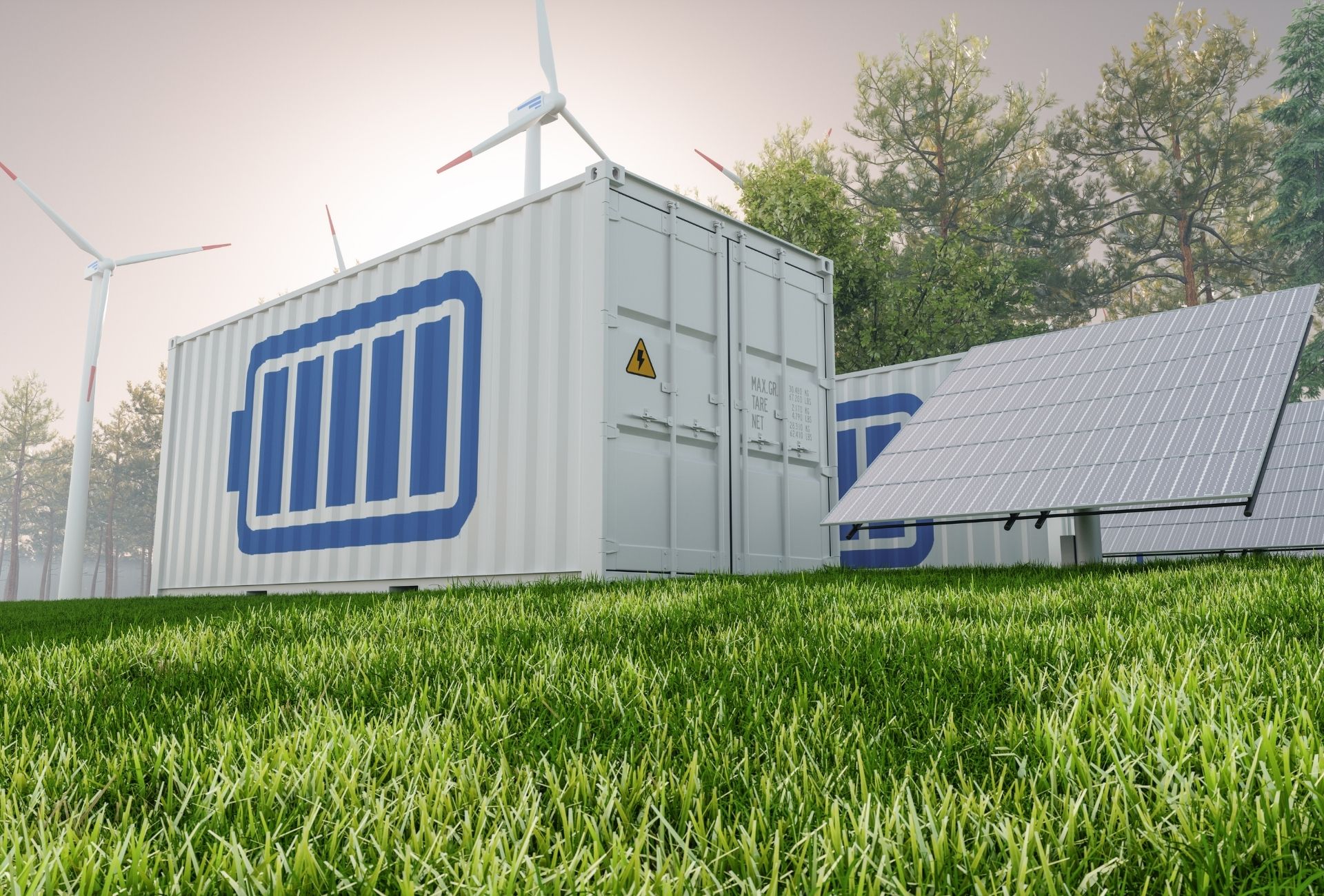
During charging, the system draws electricity from the grid or a renewable source—solar panels, wind turbines, or both. The Energy Management System (EMS) determines when charging happens, typically scheduling it during off-peak hours when electricity prices are lowest. The Battery Management System (BMS) monitors each cell’s voltage, temperature, and state of charge (SoC) in real time to prevent overcharging and thermal stress.
The rate at which a battery charges or discharges is expressed as the C-rate, defined by the formula T = 1/Cr, where T is time in hours, and Cr is the C-rate. A C-rate of 1C means the battery charges from 0% to 100% in one hour; 2C halves that to 30 minutes; 0.25C stretches it to four hours. Most commercial energy storage system configurations operate between 0.25C and 1C. Once fully charged, lithium-ion cells self-discharge at less than 3% per month—low enough for both daily cycling and standby applications.
Discharging — From Battery to Load
When energy is needed, the battery discharges through the PCS, which converts DC to AC for on-site use, grid export, or backup supply. The EMS optimizes discharge timing based on energy prices, demand forecasts, and grid signals. In frequency regulation applications, the system can respond in under 150 milliseconds—faster than any conventional generator can ramp.
The Core Components Inside a BESS
Battery Modules and Storage Enclosure
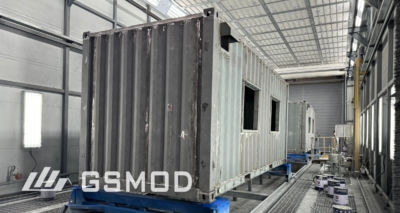
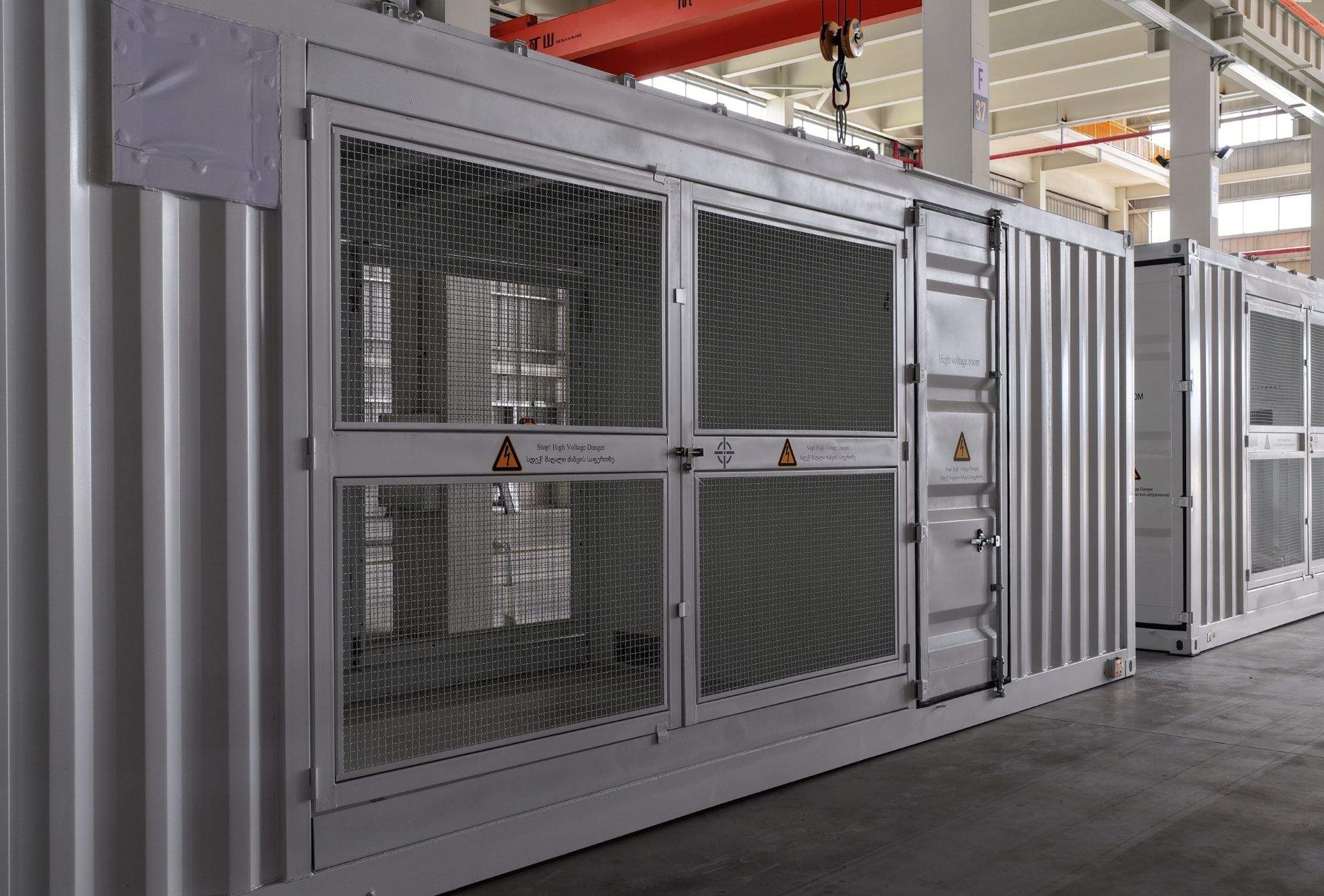
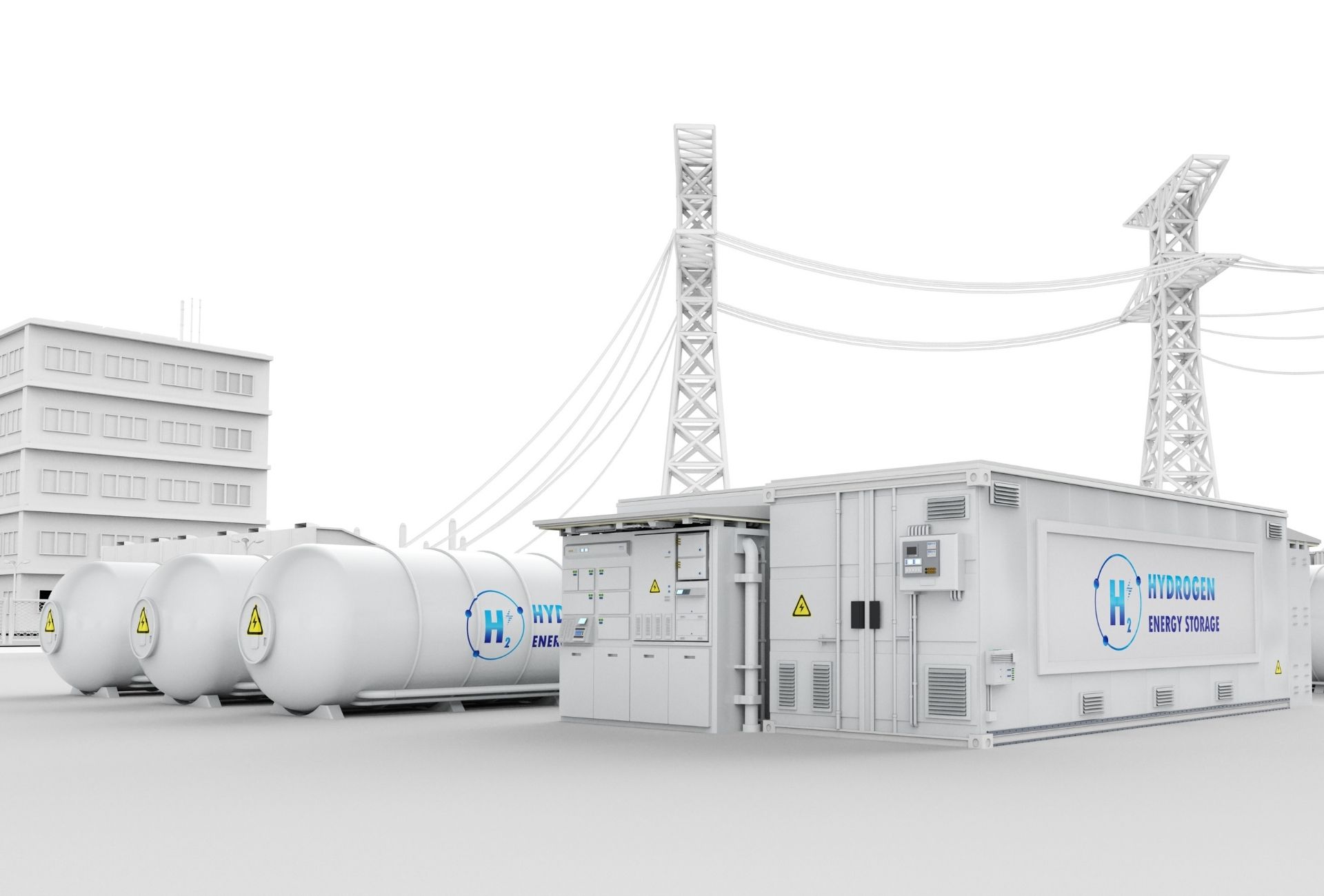
Battery modules are the physical units where energy is stored. Individual cells group into modules, modules stack into racks, and racks sit inside a storage enclosure—either an outdoor cabinet or a standard shipping container. The enclosure is not passive housing: it provides the structural frame that carries load across the full stack, environmental sealing against moisture and dust, fire containment to isolate thermal events, and the physical mounting points for thermal management and safety systems. A well-engineered enclosure from a modular construction company ships factory-tested and ready to receive internal components on site, cutting installation time and reducing field coordination risk.
Battery Management System (BMS)
The BMS is the system’s safety layer. It monitors voltage, current, and temperature at the cell level and estimates SoC and SoH across the entire battery bank. When any parameter moves outside its safe operating window, the BMS triggers protective actions—reducing charge rate, initiating cooling, or disconnecting the pack entirely. A well-designed BMS extends cycle life and prevents the thermal runaway events that degrade poorly managed lithium-ion systems.
Power Conversion System (PCS) and Inverter
The PCS manages the electrical interface between the battery and the AC network. Bidirectional inverters allow energy to flow both ways: into the battery during charging and out to the load during discharge. The PCS also regulates output voltage and frequency to meet grid interconnection standards. In grid-tied commercial installations, the PCS is what enables a BESS to participate in frequency response markets and demand response programs.
Energy Management System (EMS)
The EMS coordinates the entire system based on external signals and internal data. It schedules charge and discharge cycles, communicates with grid operators, and optimizes dispatch for the lowest cost or highest revenue.
Thermal Management and Safety Systems
Heat is the primary cause of battery degradation and the trigger for thermal runaway in lithium-ion chemistries. Thermal management systems—ranging from air cooling to liquid cooling loops—maintain cell temperatures within a narrow operating band, typically 15°C to 35°C. Safety systems add fire suppression, gas detection, and controlled ventilation. Installation requirements for stationary BESS are governed by NFPA 855, which sets minimum clearances, suppression requirements, and hazard mitigation standards. In any BESS evaluation, the thermal management specification is as important as the capacity rating.
Battery Chemistry Options and How to Choose
Lithium-Ion — LFP vs NMC
Lithium iron phosphate (LFP) and lithium nickel manganese cobalt oxide (NMC) dominate commercial and utility BESS installations. LFP offers lower energy density but superior thermal stability and a cycle life of 3,000–6,000 cycles at 80% depth of discharge (DoD)—making it the default for stationary storage where longevity and safety outweigh compactness. NMC delivers higher energy density and suits space-constrained installations, but it requires more careful thermal management and typically achieves 1,000–3,000 cycles under similar conditions.
Lead-Acid and Flow Batteries
Lead-acid remains relevant in low-cost backup applications—UPS systems, telecom sites—where the duty cycle is light and upfront cost drives the decision. Flow batteries, particularly vanadium redox (VRB), offer cycle lives exceeding 10,000 cycles and suit long-duration storage of four hours or more. Their energy density is low and initial cost is high, but for grid-scale projects requiring a 20-year asset life, the economics can favor flow over lithium.
| Chemistry | Cycle Life | Energy Density | Best Use |
| LFP | 3,000–6,000 | Moderate | Commercial / utility BESS |
| NMC | 1,000–3,000 | High | Space-constrained installs |
| Lead-Acid | 300–1,200 | Low | Low-duty backup / UPS |
| Flow (VRB) | 10,000+ | Low | Long-duration grid storage |
Where BESS Is Used and What Scale to Expect
Commercial and Industrial Applications
Commercial and industrial BESS systems typically range from 100 kWh to 1 MWh. The primary application is peak shaving: storing energy during off-peak hours and discharging it during peak demand windows to avoid expensive demand charges. A manufacturing facility running a 500 kWh system can flatten its demand profile enough to reduce monthly electricity costs by 15–30%, depending on the tariff structure. Systems assembled at a dedicated modular factory arrive with all components validated at rated capacity, reducing on-site commissioning to connection and handover rather than full system integration.
Utility-Scale and Grid Services
Utility-scale systems start at 10 MWh and extend into the hundreds of megawatt-hours for large grid-connected installations. At this scale, BESS participates in frequency regulation markets, capacity markets, and energy arbitrage—buying low-cost overnight power and selling it during daytime peak periods. Revenue from these stacked services can substantially improve project economics.
Why a Modular Energy Storage System Works for Large Projects
The containerized format has become the standard delivery method for commercial and utility BESS. A modular energy storage system built around a purpose-designed steel enclosure arrives on site structurally complete—with thermal management channels, fire suppression mounting points, cable management, and ventilation already integrated into the shell. The enclosure does the work that would otherwise require extensive field fabrication: it defines the safe operating environment for every component inside. This approach shares the same logic as permanent modular construction in the building industry: shifting precision work to a factory environment reduces field risk and compresses timelines.
Conclusion
A battery energy storage system is not a single product. It is a layered assembly of cells, management systems, power electronics, and enclosure infrastructure—each with its own specifications and performance tradeoffs. The chemistry determines cycle life and thermal profile. The BMS and EMS determine how intelligently the system operates. The C-rate and storage duration determine whether the system fits the intended application.
When evaluating proposals, request four numbers from every supplier: round-trip efficiency (RTE, target above 85% AC-AC), depth of discharge at rated cycle life, guaranteed cycle count, and response time. With those four figures, any two systems can be compared on equal footing—regardless of chemistry, brand, or container color.
FAQ
What’s the difference between a BESS and a UPS? A
UPS bridges a power gap for seconds to minutes to protect equipment during an outage. A BESS stores and dispatches energy over hours, and can participate in grid services like frequency regulation and demand response—functions a UPS is not designed for.
How long does a BESS last?
LFP systems typically deliver 3,000–6,000 full cycles at 80% DoD before capacity drops below 80% of the original rating—roughly 8–16 years at one cycle per day. Operating at a shallower DoD extends cycle life considerably.
Can a BESS charge from the grid without solar?
Yes—a BESS charges from any AC source through the PCS, including the grid or diesel generators. Solar co-location is common but not required; grid-only charging is standard in arbitrage and frequency regulation applications.
What should I ask BESS manufacturers before buying?
Request cycle life at your target DoD, round-trip efficiency, response time, and capacity retention warranty terms. Confirm whether BMS, PCS, and thermal management are factory-integrated or field-assembled, as this directly affects commissioning time.
How is BESS pricing typically structured?
Most battery energy storage system companies quote on a $/kWh basis, with separate line items for PCS, EMS, installation, and grid interconnection. In some commercial LFP projects, fully installed costs may fall within a few hundred dollars per kWh, but actual figures vary significantly by country, scale, and site requirements. Always compare on a fully commissioned basis—not cell cost alone.