




CONTACT INFO
- Email:info@gsmodular.com
- WhatsApp:+86 13702926570
COMPANY ADDRESS
- No. 435, Hehe Avenue West, Genghe Town, Gaoming District, Foshan City, Guangdong Province, China
Our intelligent digital system creates a "transparent factory" data center, enabling mobile data collection, intelligent production warnings, and online decision-making and dispatch. Digitization and intelligence are integrated throughout the entire project construction process, incorporating high-tech solutions like smart design, smart production, smart logistics, and smart operation and maintenance, to achieve digital delivery across the entire project lifecycle.
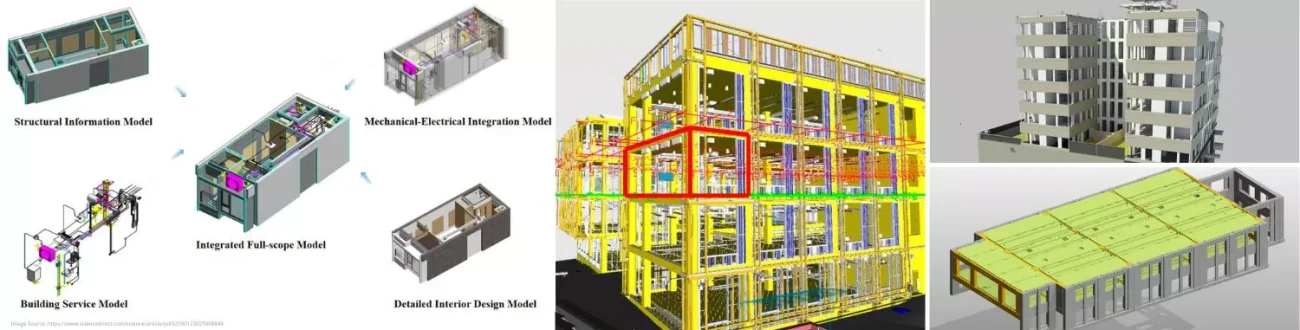
Integrated design across all disciplines, utilizing visual model collaboration and optimization
Project managers can monitor the transportation status of every product in real-time and dispatch inventory at warehouses, transit depots, and sites.
The "Electronic Sentry" O&M system provides real-time monitoring of building equipment for safe operation, collecting both safety and energy consumption data.
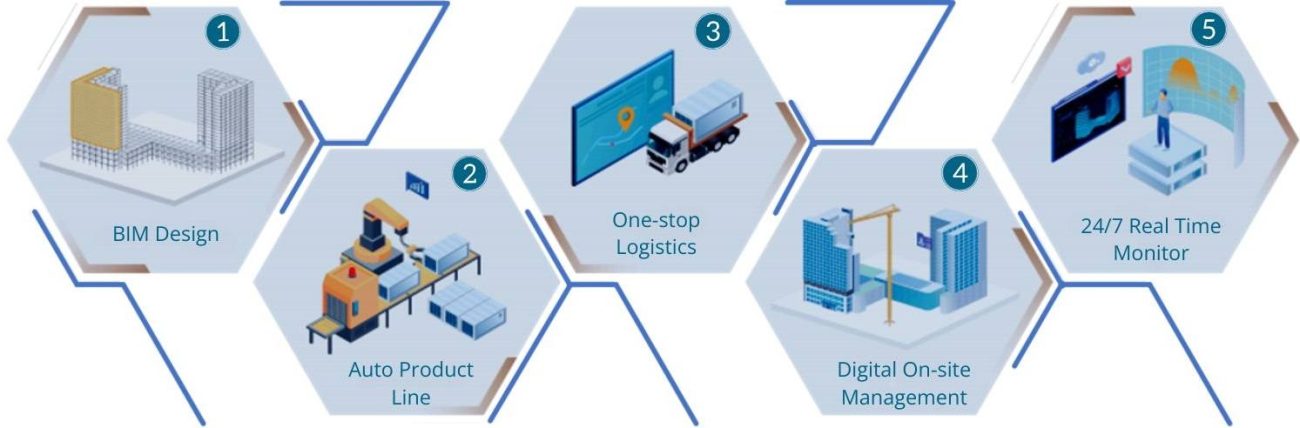
Through the C-Smart Comprehensive Platform's intelligent and digitized management, the supervisors are able to real-time monitor personnel distribution, safety alerts, vehicle movements, material resources, quality and progress, etc.
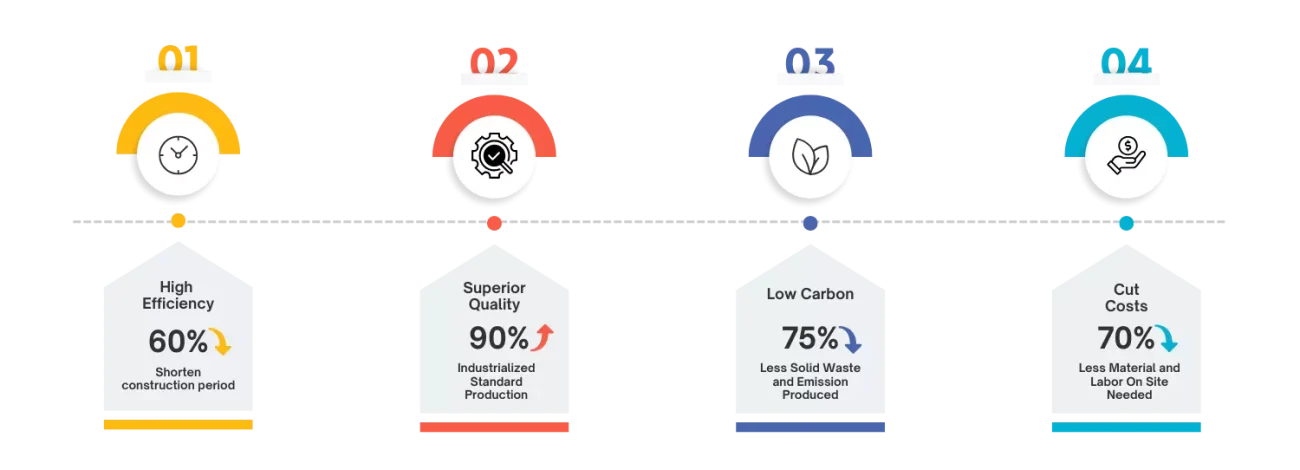
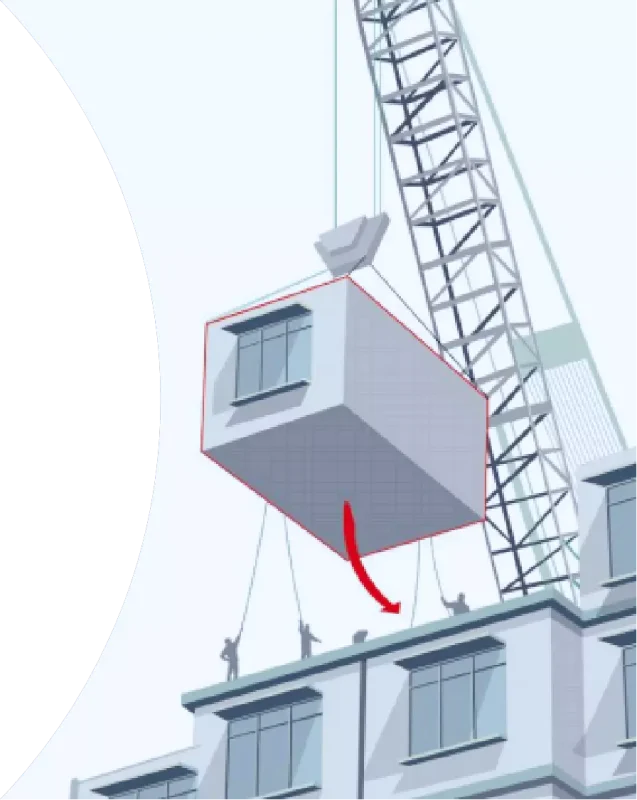
The modular integrated buildings adopt a Design for Manufacturing and Assembly (DfMA) concept, achieving over 90% prefabrication. Structure, finishes, and equipment are integrated during factory production using automated equipment, significantly boosting precision, quality, and efficiency.


We utilized the models integrates all scopes to quickly build up the acknowledge of the models for all workers, improve the training efficiency and project hand-over quality. Instead of separate models for architecture, structural, engineering, mechanical, electrical and MEP, and other specialized fields, such models integrates all the scopes into a single, which helps to enhances collaboration among all parties, minimize clash and conflicts between different systems, and improves efficiency and accuracy.
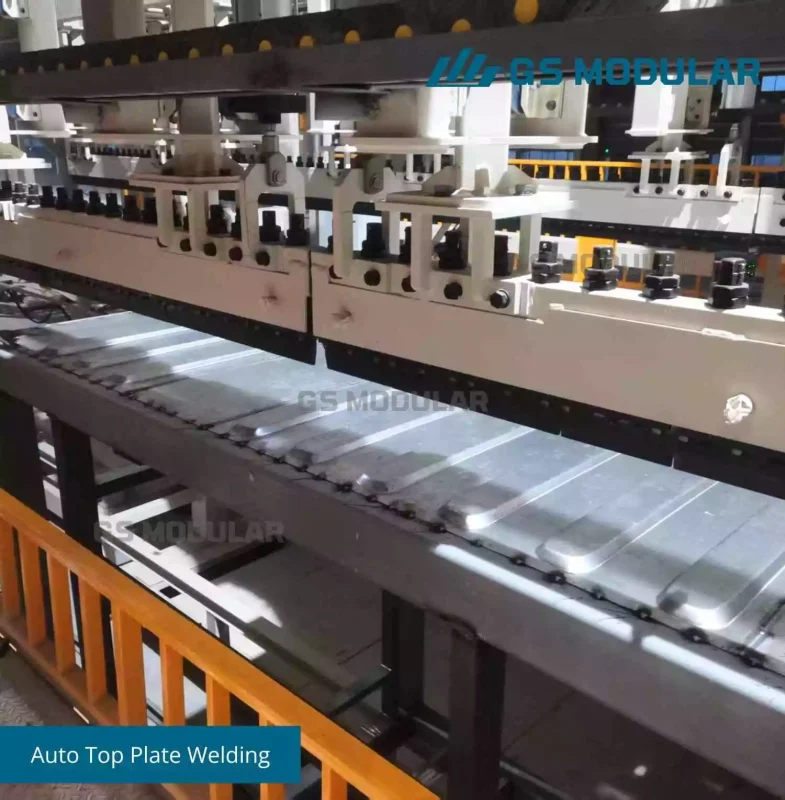
We use modular integration technology as the most crucial method for reducing construction waste at the source. In the factory, we achieve fine-grained control over raw materials during production, which minimizes material waste. Green processes like fully automated welding robots, automated curtain wall cutting, and automated component stacking production enhance the intelligence of the production process and improve the working environment. Overall, the emission levels of construction waste are reduced by over 75% compared to traditional projects, which is 25% lower than the emission target for prefabricated buildings set for the end of the 14th Five-Year Plan.
The table on the right shows our company's solid waste emissions calculations for a modular hotel project.
Raw Material
Emission(t)
Ratio of the Overall Emission
steel reinforcing bar
25.35
0.67%
steel structure welding slag
0.96
0.03%
concrete
1973.26
52.28%
motar
123.88
3.28%
sand, gravel, planting soil
727.01
19.26%
concrete products
10.96
0.29%
inorganic wall panels
562.65
14.91%
metal panels
11.36
0.30%
wooden formwork
55.83
1.48%
paints, adhesives
161.37
4.28%
thermal insulation material for walls
109.92
2.91%
other(incl. package)
12.00
0.32%
3774.5
100%