CONTACT INFO
- Email:info@gsmodular.com
- WhatsApp:+86 13702926570
COMPANY ADDRESS
- No. 435, Hehe Avenue West, Genghe Town, Gaoming District, Foshan City, Guangdong Province, China
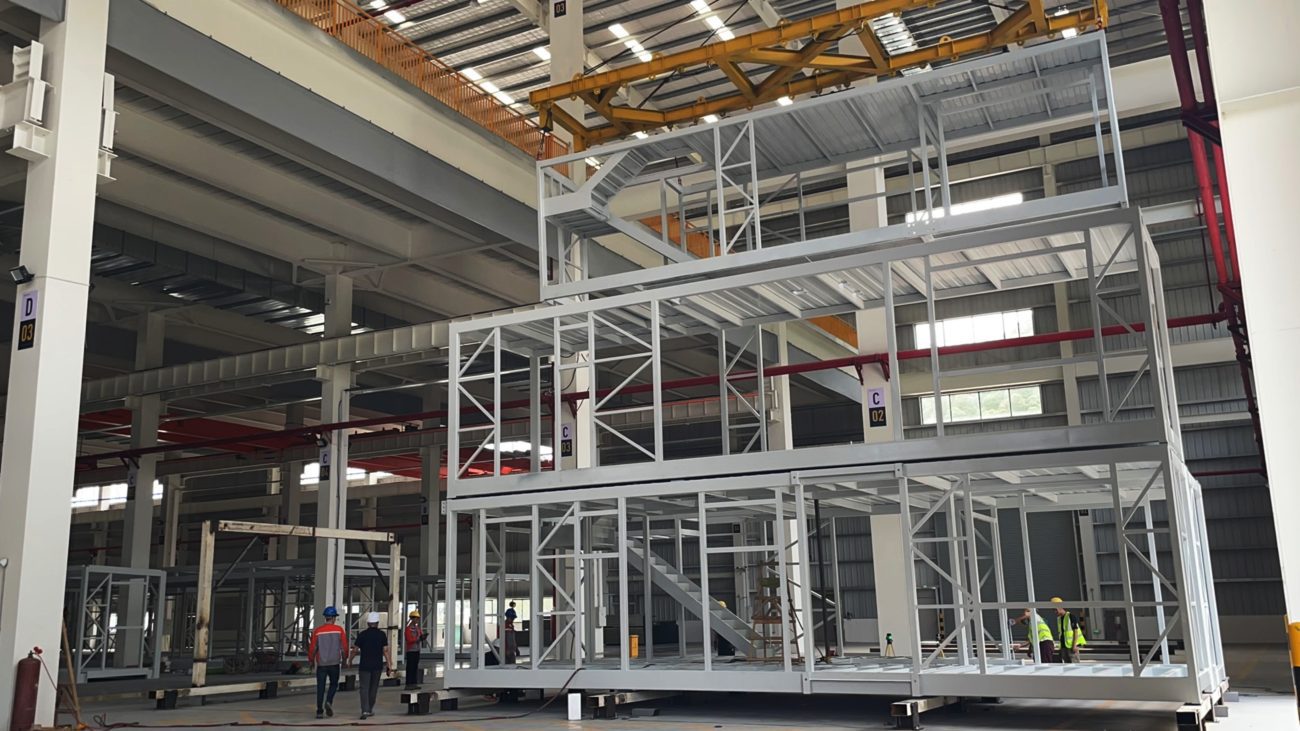
Bolted structures are an indispensable component of modern modular construction. In this construction method, bolts are used to securely connect different building components, providing a high-strength and durable solution for the construction of modular buildings.
GSMOD's modular building connection systems are designed for global compliance, structural safety, and easy on-site assembly. From high-strength bolted joints to pre-aligned connection boxes, our solutions ensure reliable load distribution and consistent performance across multi-story and low-rise projects. All systems meet international engineering standards including EN, AS/NZS, and ISO certifications.
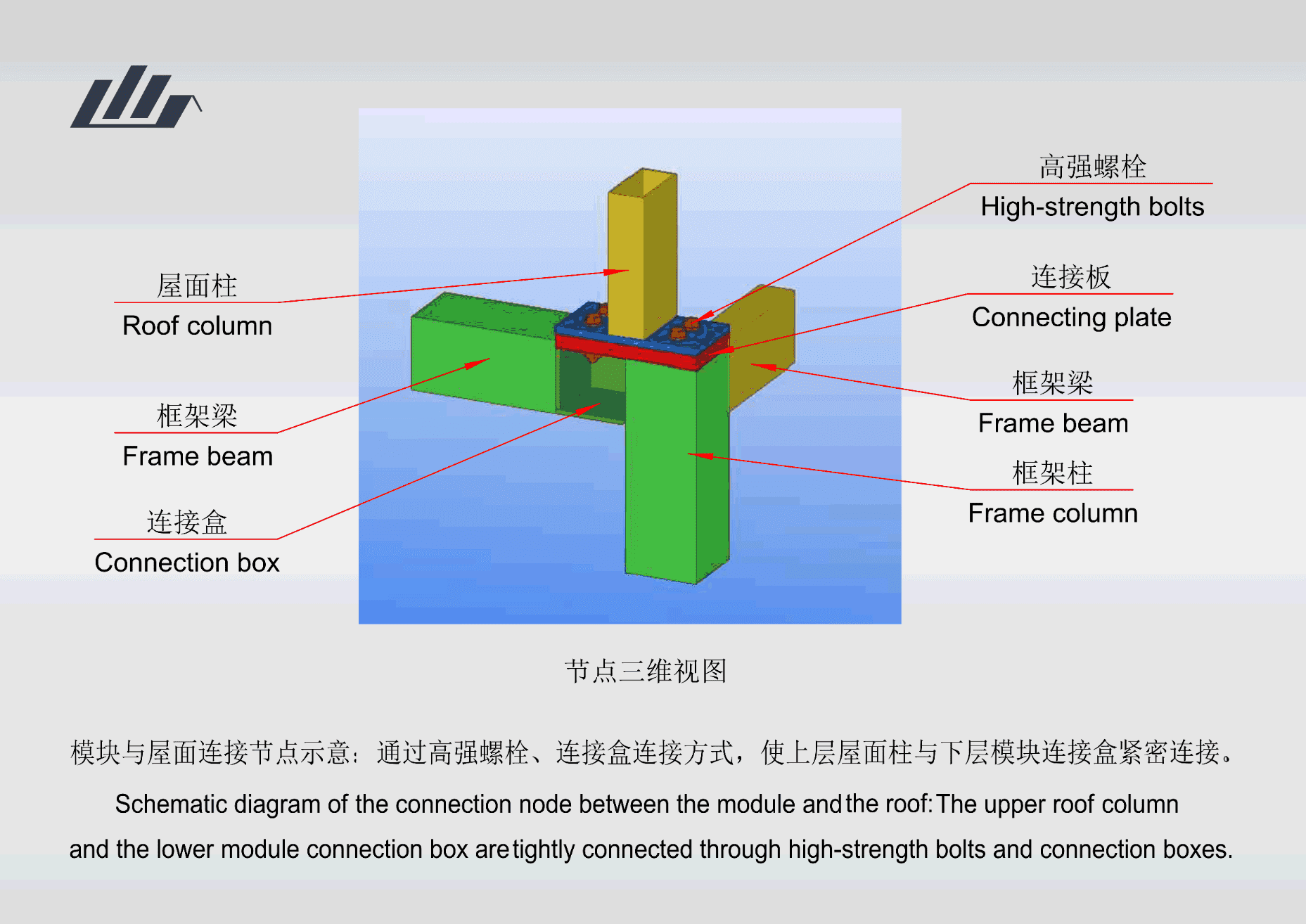
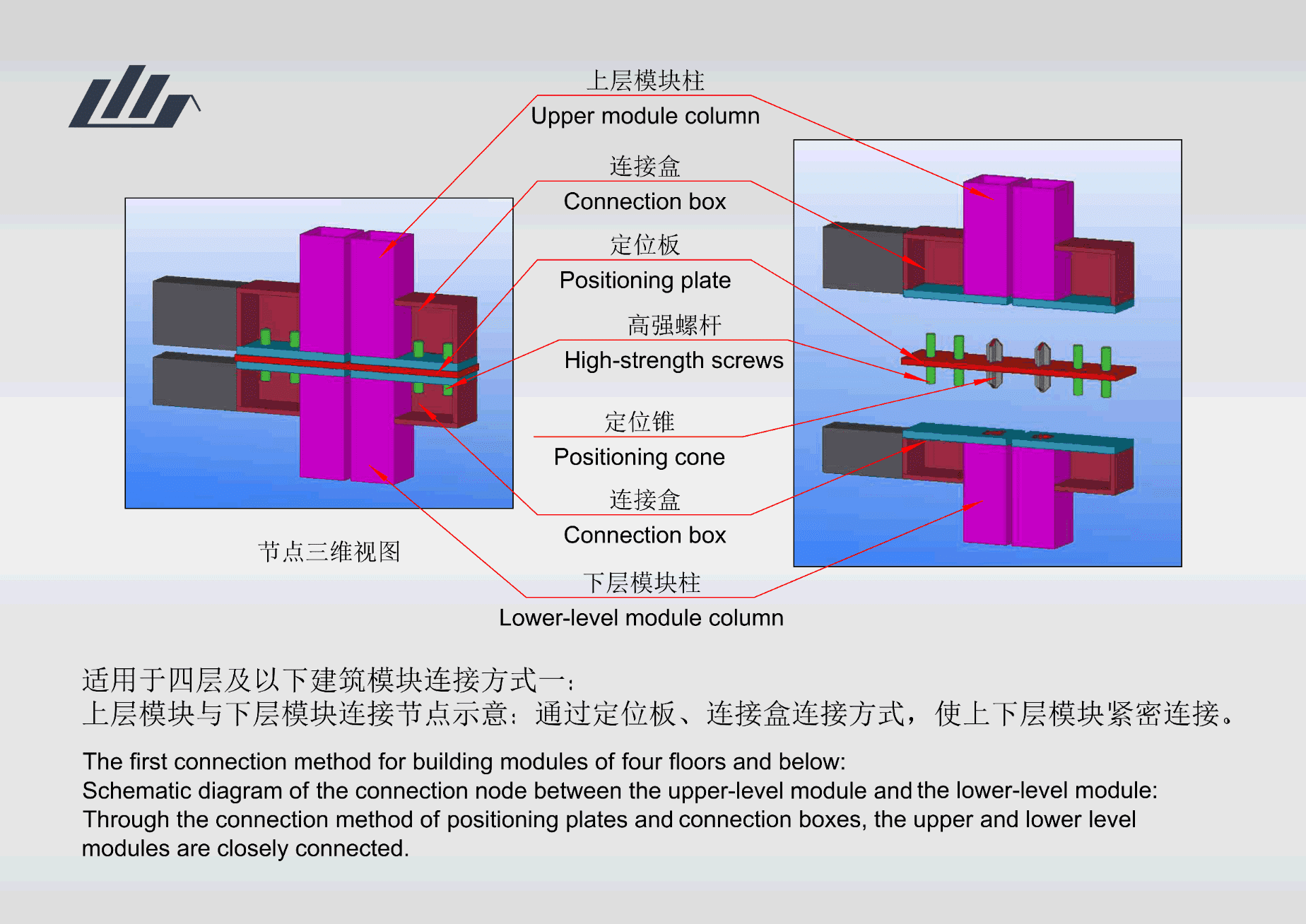
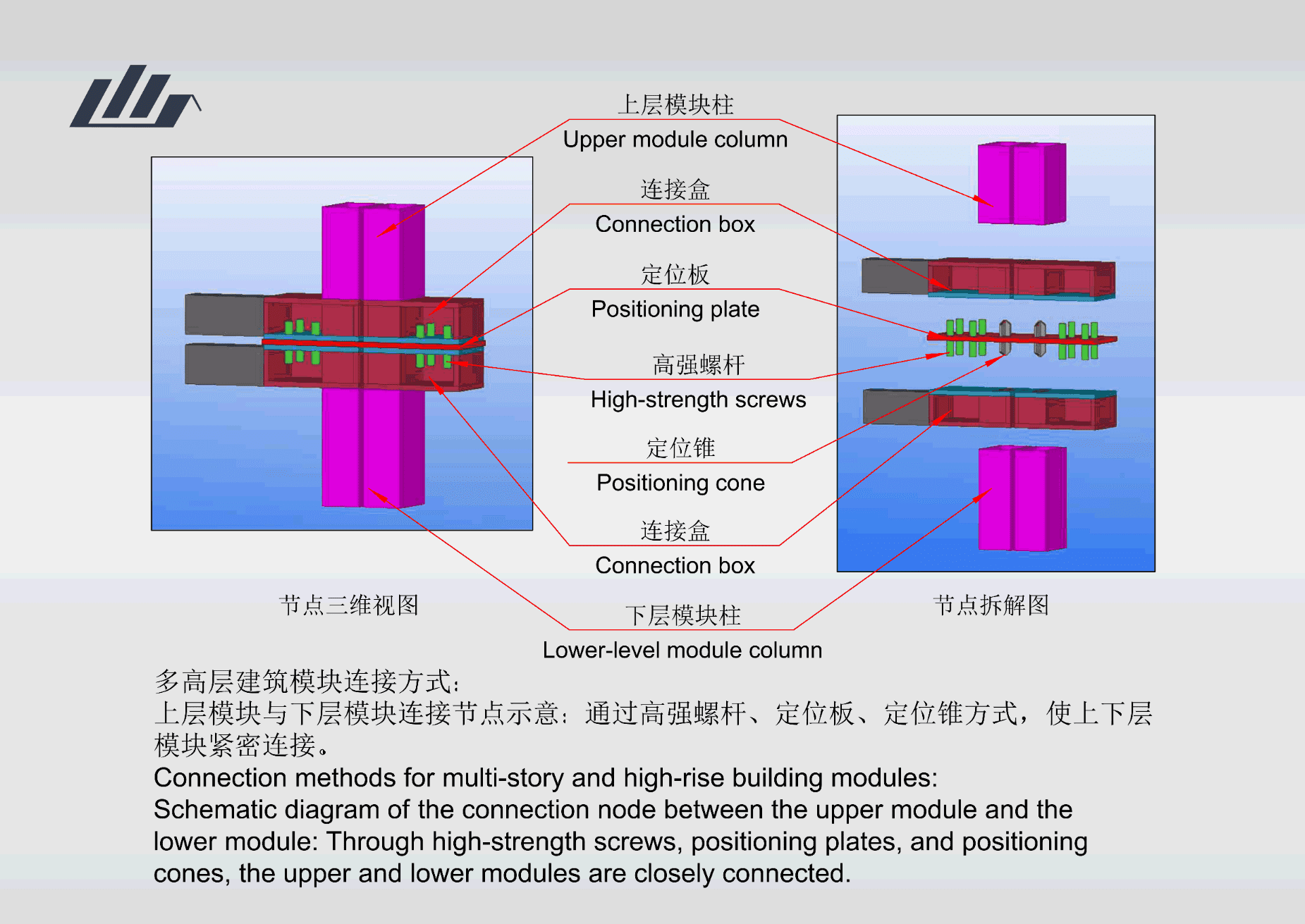
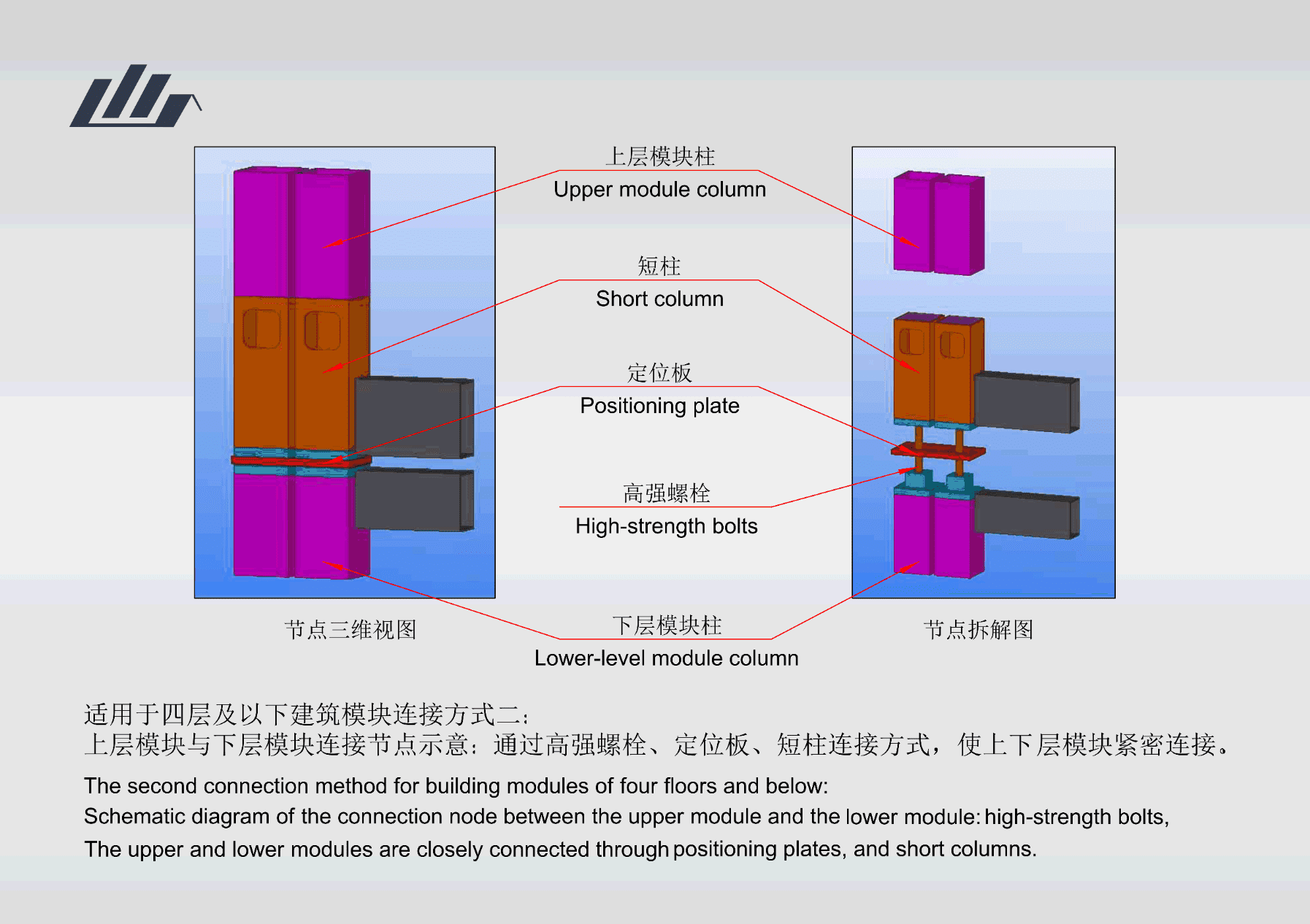
Each connection node—featuring positioning plates, connection boxes, and high-strength bolts—is engineered to deliver precise load transfer while maintaining structural integrity. Our detailed diagrams showcase standardized methods for modular buildings up to four stories, with specialized solutions for high-rise applications. Compliance is guaranteed through rigorous testing and alignment with global building codes.
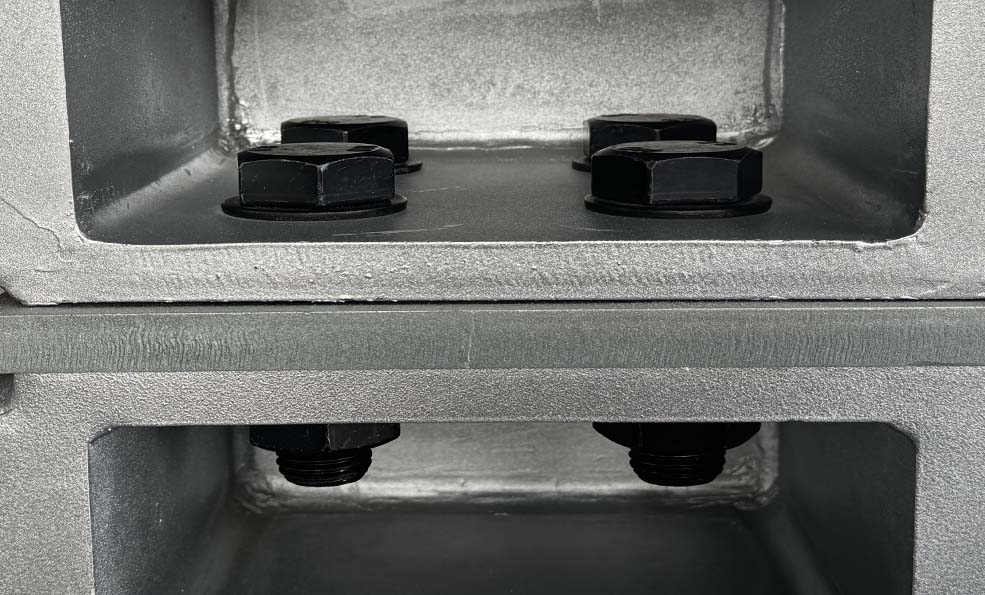
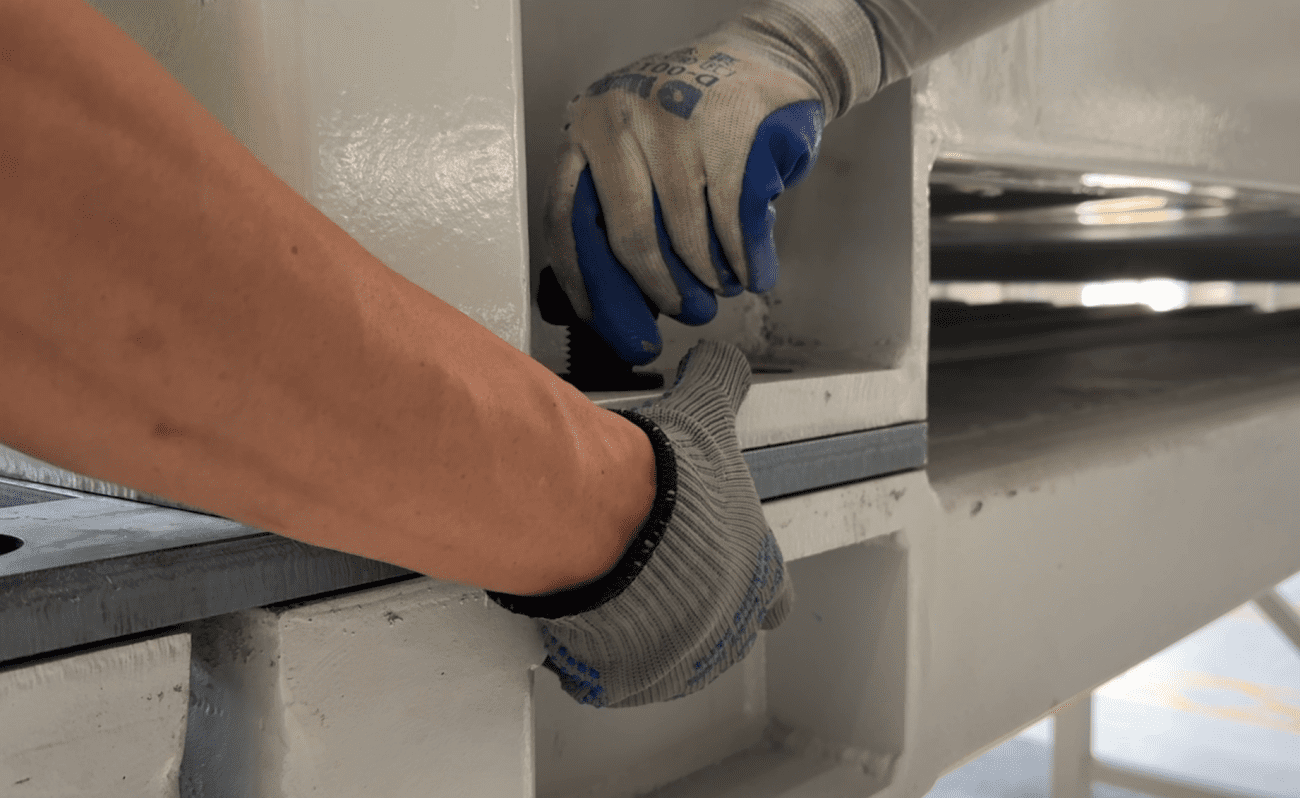
High-strength bolted connections are used throughout the modular steel frame system to provide secure load transfer, structural stability, and efficient assembly. Typical connection points include beam-to-column joints, corner posts, floor perimeter frames, roof framing, and inter-module stacking interfaces.
To ensure structural performance, bolted connections must be installed in accordance with approved engineering drawings and site assembly procedures. Critical requirements include alignment verification, correct bolt orientation, sequential tightening, and torque or pretension control where specified. Final inspection should confirm bolt grade, washer placement, thread engagement, and tightening condition.
Modular steel structures typically use high-strength structural bolts, including Grade 8.8 and Grade 10.9 bolts, designed for heavy loads and structural integrity. Depending on the connection type, hex bolts, anchor bolts, and tension control bolts are commonly used to ensure stability, durability, and ease of assembly.

Yes, high-strength bolts are specifically designed to handle the load demands of multi-storey modular buildings. They provide superior shear and tensile capacity, allowing safe connections for both vertical and horizontal elements while maintaining structural safety and compliance with building codes.
Bolted joints undergo rigorous inspection during and after installation. Common inspection methods include torque testing, tension verification, and visual checks to ensure proper alignment, correct bolt grade, and secure fastening. For critical structures, non-destructive testing (NDT) may also be performed to confirm integrity.
Yes, one of the key advantages of bolted modular construction is its reversibility. Structures can be carefully disassembled, transported, and reassembled at a new location without compromising the original components, making it ideal for temporary buildings, expansions, or relocatable solutions.
Absolutely. Bolted modular structures are designed to comply with AS/NZS 1252, AS/NZS 4600, and other relevant international standards such as ISO 898-1 and Eurocode 3. Compliance ensures structural safety, reliability, and legal approval for both domestic and overseas projects.
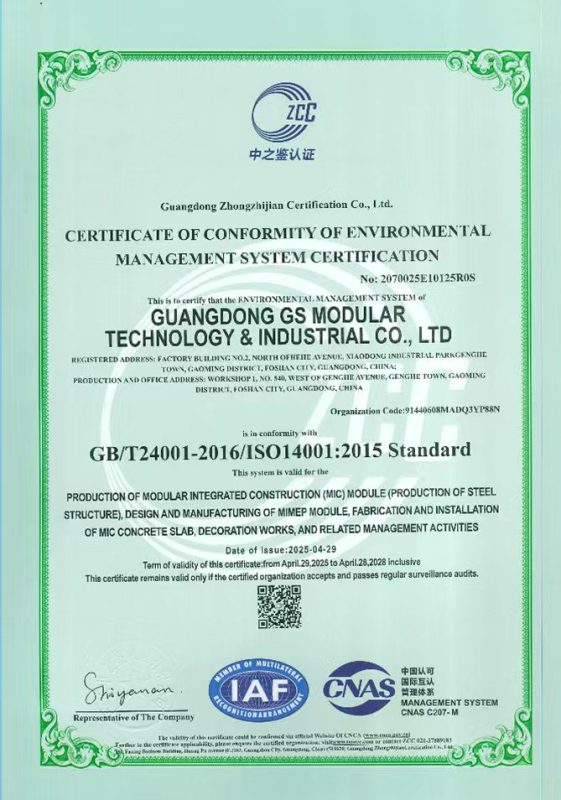
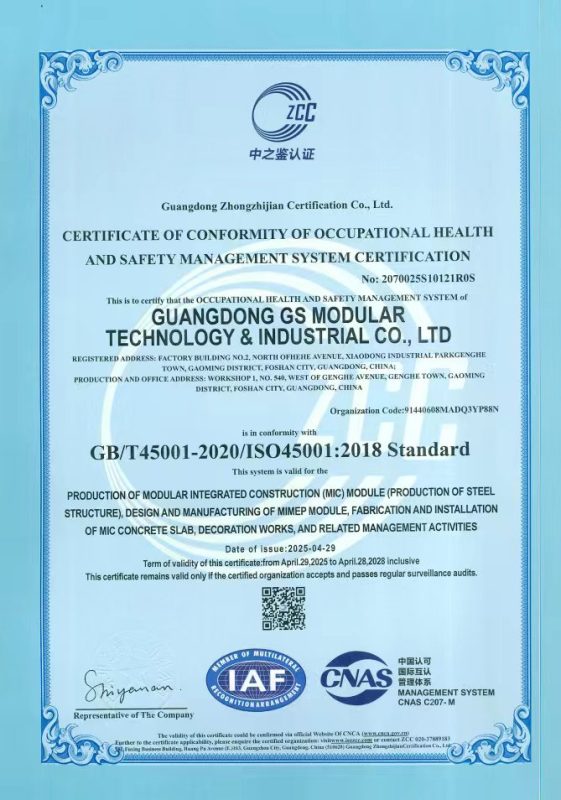
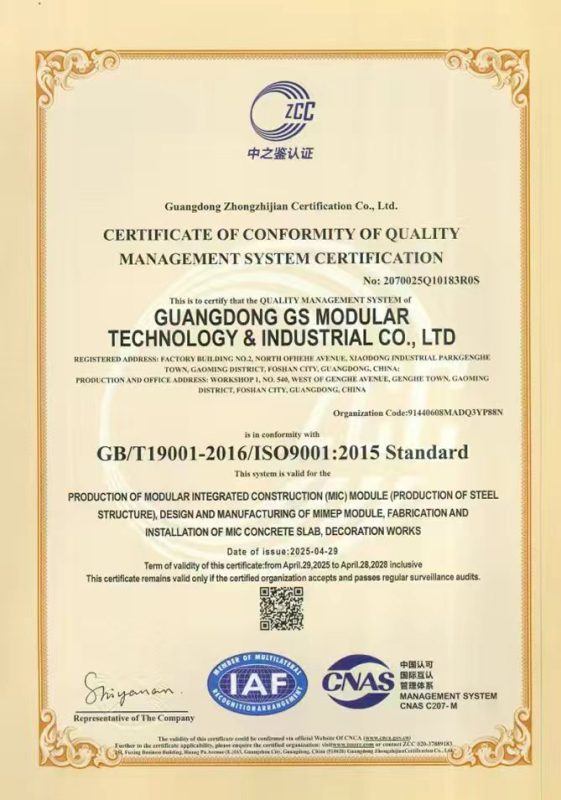
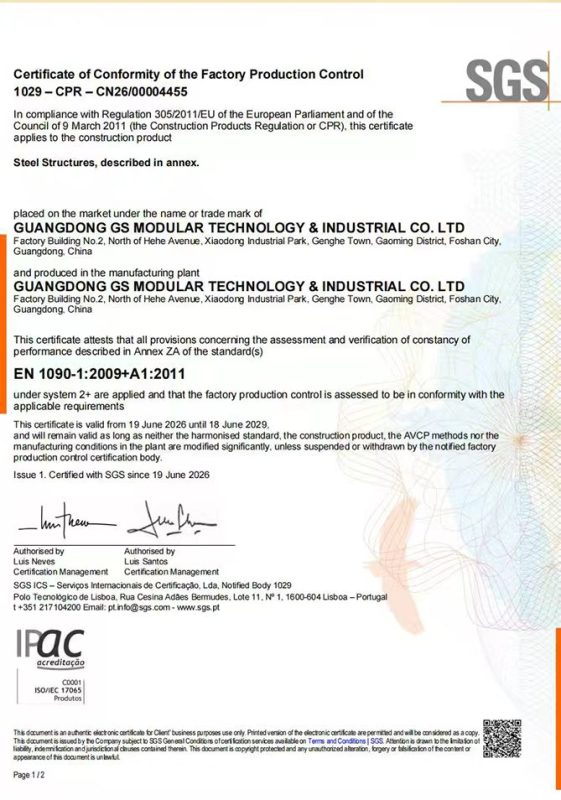
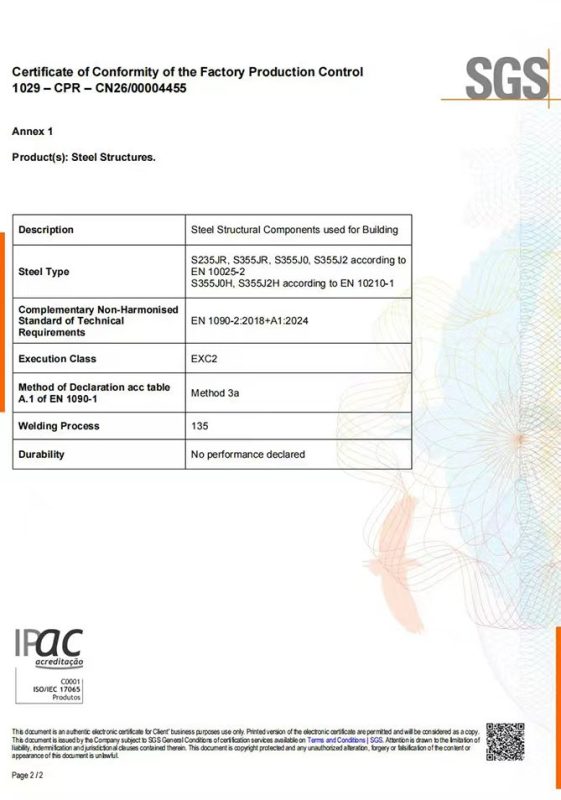
GSMOD follows internationally recognised management standards throughout the design, manufacturing and delivery of modular buildings and heavy-steel structures. Our certifications demonstrate our commitment to consistent quality, environmental responsibility, occupational health and safety, and reliable project delivery.