

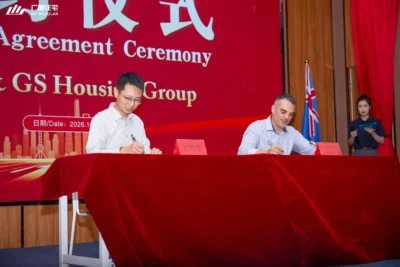
GS Modular’s strategic cooperation signing ceremony on 19 October 2026.
Connecting Manufacturing Expertise with Australian Mining Project Requirements
On 19 October 2026, GS Modular signed a strategic cooperation agreement with an Australian project delivery partner to support the development of modular mining camp buildings for Australia’s mining and resources sector. The collaboration focuses on GS Modular’s heavy-steel volumetric Modular Integrated Construction (MiC) building system, bringing manufacturing expertise together with local knowledge of mining project requirements and delivery conditions.
Remote Mining Sites Shape the Design Brief
Developing accommodation for remote mining operations involves more than manufacturing building modules. Long transport routes, demanding site conditions and project schedules all influence how buildings need to be designed, transported and installed.
A design decision that appears straightforward on a drawing can become more complex when a volumetric module must be transported, positioned on site and connected to building services. Module dimensions, structural arrangements, service connections and installation methods therefore need to be considered together, well before factory production begins.
These requirements also have a direct bearing on the people who will use the buildings. Mining camp accommodation needs to provide dependable facilities and comfortable living conditions, often in locations where maintenance and access to services can be challenging.
From Factory Visits to Technical Cooperation
The agreement followed a period of factory visits and technical exchanges between the two teams. They reviewed GS Modular’s manufacturing facilities, production processes and product requirements, while exploring how the company’s MiC building system could respond to the needs of Australian mining projects.
The discussions extended beyond manufacturing equipment and technology. They also highlighted the importance of the people, management processes and communication practices behind consistent production quality and effective cooperation.
GS Modular contributes engineering support, supply chain and production management, and factory quality control. Its Australian partner brings knowledge of local client expectations and project specifications, together with experience coordinating engineering, procurement, logistics and project delivery.
Together, these capabilities give both teams an opportunity to address local project requirements across manufacturing and delivery, rather than treating factory production and local project needs as separate considerations.
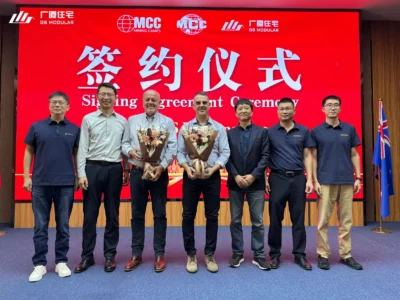
Representatives from both teams gather during the strategic cooperation signing ceremony.
Turning Project Requirements into Practical Work
Discussions have identified several potential areas for continued technical cooperation, including product specifications, manufacturing quality, logistics planning and building performance. Any project-specific scope and responsibilities would need to be agreed separately.
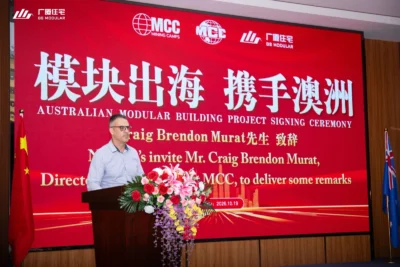
Remarks at the ceremony reflected the importance of manufacturing quality, communication and long-term cooperation.
At the design stage, an important consideration is how material selections, functional layouts, structural arrangements and building-service connections fit within the dimensions and transport limitations of volumetric modules. Understanding these relationships early can help the engineering and manufacturing teams identify issues before production decisions are finalised.
Manufacturing quality raises a related question: how can agreed project requirements be translated into production procedures and inspection practices that factory teams can consistently follow? Procurement, production, inspection and transport schedules must also be considered alongside the requirements of the destination site.
For mining camp occupants, the results of these decisions are experienced in much simpler terms. After a long shift, workers need reliable hot water, effective cooling and a quiet room in which to rest.
Everyday details such as doors, joints and building-service connections can influence that experience. Considering them during design and manufacturing discussions helps connect technical decisions with the conditions in which the buildings will ultimately be used.
The Next Stage of Cooperation
Both parties intend to continue technical exchanges and explore further opportunities for modular mining camp projects in Australia. As individual opportunities develop, the focus will be on clarifying product requirements, coordinating manufacturing and quality processes, and aligning production planning with local delivery needs.
For GS Modular, the agreement is a starting point for practical work. Its longer-term value will depend on how effectively the teams turn their shared understanding into clear specifications, workable manufacturing plans and coordinated project delivery.