

Getting a straight answer on modular office building costs is harder than it should be. Most manufacturer websites deflect to “contact us for a quote” without giving you a usable number. This guide pulls together verified market data so you can build an accurate budget before you pick up the phone.
What Is the Base Cost of a Modular Office Building?
A modular office building costs range from $50 to $350 per square foot, depending on the grade of construction, building size, and level of customization. For steel frame permanent modular offices, the realistic range is $150 to $350 per square foot, reflecting higher-grade materials, MEP integration, and finish quality.
These figures reflect total installed cost — the building itself, delivery, foundation, crane setting, utility connections, and interior finishes. Site preparation, grading, and landscaping are additional. When comparing quotes, always ask for the “total turnkey cost” — not just the building price. The building shell typically represents only 50–60% of the total project cost.
How Does Grade Affect the Price?
Basic Grade ($50–$100/sq ft)
Single-room or open-plan layouts with standard wall panels, basic HVAC, and minimal fit-out. Suited to temporary site offices, storage-adjacent workspaces, or short-term deployment. Typically relocatable rather than permanent.
Mid-Grade ($100–$200/sq ft)
Mid-grade is where modular construction becomes visually indistinguishable from conventional buildings. Upgraded exterior cladding, LVT or commercial tile flooring, LED lighting, better insulation, and more sophisticated HVAC are standard. Conference rooms, break rooms, and restrooms are included. This grade delivers a permanent building lasting 60+ years.
Premium ($200–$350+/sq ft)
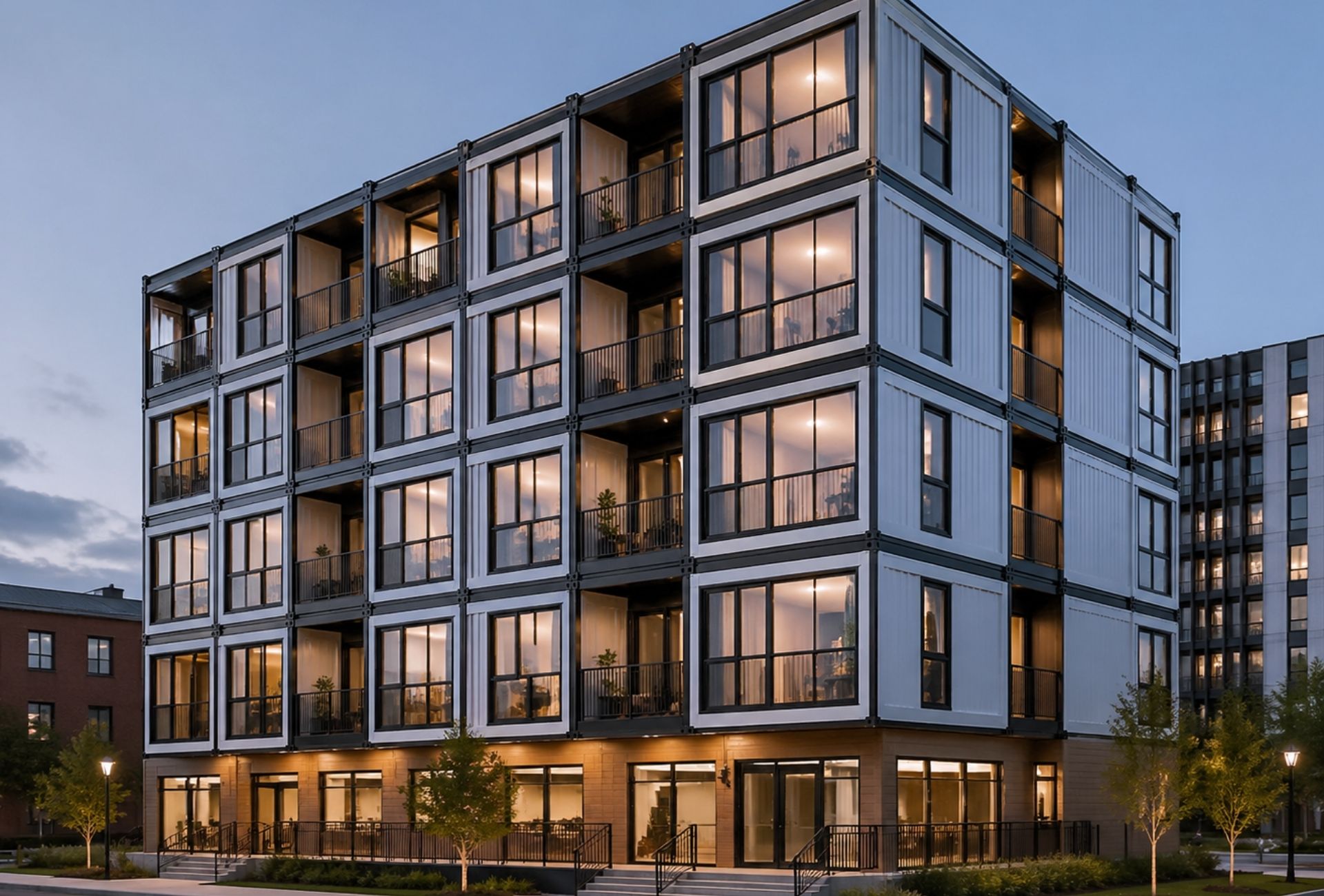
Custom steel frame modular buildings at this grade feature advanced HVAC systems, fire-rated materials, and complex MEP integration. Curtain wall glazing, stone or masonry veneers, raised access floors, smart building systems, and multi-storey configurations fall here. Virtually indistinguishable from site-built construction at completion.
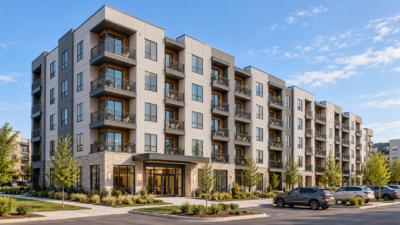
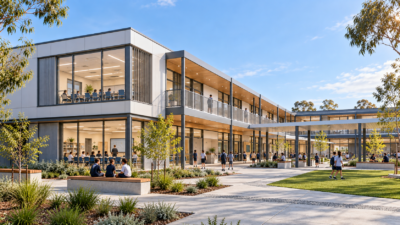
For businesses and developers exploring what a Modular Office looks like across different specifications, the range, from mid-grade to premium, covers most permanent commercial applications.

What Does a Modular Office Cost by Size?
Building size is the single largest cost driver. Cost per square foot decreases with larger projects — foundation, delivery logistics, and utility connections are similar whether the building is 1,000 or 5,000 square feet, so fixed costs spread more thinly at scale.
| Building Size | Basic (USD) | Mid-Grade (USD) | Premium (USD) |
| 500 sq ft | $30,000–$50,000 | $60,000–$100,000 | $100,000–$175,000 |
| 1,000 sq ft | $50,000–$100,000 | $100,000–$200,000 | $200,000–$350,000 |
| 2,400 sq ft | $120,000–$240,000 | $240,000–$480,000 | $480,000–$840,000 |
| 5,000 sq ft | $225,000–$450,000 | $450,000–$900,000 | $900,000–$1,500,000 |
| 10,000+ sq ft | $400,000–$800,000 | $800,000–$1,800,000 | $1,800,000–$3,500,000+ |
Source: metal-buildings.org 2026 Modular Office Cost Guide, compiled from Modular Building Institute (MBI) industry data.
What Factors Affect Modular Office Building Cost?
Building Size
Size is the single largest variable. Total cost increases with square footage, but cost per square foot decreases as projects get larger — the fixed costs of foundation, delivery, and utility connections spread across more usable area.
Grade and Specification
The difference between basic and premium grade can triple the per-square-foot cost. Upgrading cladding, flooring, HVAC complexity, and interior finish level are the primary drivers of specification cost.
Customisation vs. Standard Plans
Using a manufacturer’s existing floor plan saves 10–20% and eliminates architectural design fees. Custom designs add $5,000–$15,000 in drawings and engineering, plus extend the schedule by 4–8 weeks.
Transportation Distance
Modules cost $5–$15 per mile to transport. A manufacturer located 400 miles away versus 100 miles away can add $10,000–$25,000 to a multi-module project. Always compare total delivered cost, not just the building price.
Site Conditions
Flat, accessible sites with existing utility infrastructure keep costs predictable. Sloped terrain, poor soil, limited access, or remote locations can add $20,000–$60,000 or more in site preparation work.
Permanent vs. Relocatable
Permanent modular buildings cost 20–30% more than relocatable equivalents due to enhanced finishes, permanent foundations, and landscape integration. If there is any possibility the building will need to be moved in future, confirm the foundation specification with the manufacturer before committing.
What Additional Costs Should You Budget For?
The per-square-foot figure covers the building shell. Several line items sit outside that number and catch first-time buyers off guard.
Delivery and installation — Local delivery typically costs $5,000–$15,000; international shipment can reach $20,000–$50,000+. Professional installation accounts for 25–30% of total project cost on larger buildings.
Permits and compliance — Budget 2–5% of total project cost for compliance-related fees and plan review. The International Code Council (ICC) publishes the construction standards that all permanent modular buildings must meet; local authorities administer the permit process.
Fit-out and furniture — MEP connections, data cabling, and furniture are rarely included in base building quotes. A fully fitted working office adds $30–$80 per square foot on top of the building cost.
How Does Modular Compare to Conventional Office Construction?
Research from the Modular Building Institute (MBI) indicates that modular construction reduces total project cost by 20–35% on average compared to conventional construction of equivalent quality. The savings come from reduced labour costs, lower material waste (factory precision cutting versus field cuts), and dramatically shorter construction timelines. These advantages apply across the full range of Steel Modular Construction applications — from single-storey standalone offices to multi-building commercial campuses.
The time savings compound the cost advantage. A business that occupies its new office 4–6 months sooner avoids significant temporary lease costs and lost productivity. Most modular office projects are completed 30–50% faster than equivalent conventional construction.
| Factor | Modular Construction | Traditional Construction |
| Cost per sq ft | $50–$350 | $150–$500+ |
| Construction timeline | 8–16 weeks | 6–18 months |
| Cost certainty | High — fixed factory pricing | Moderate — weather delays, change orders |
| Material waste | 2–5% (factory-controlled) | 15–25% (field cuts) |
| Quality control | Factory inspection + state certification | Field inspection + state certification |
| Building lifespan | 70+ years | 50–100+ years |
Is a Modular Office Building a Good Investment?
For most permanent and semi-permanent office applications, yes. The combination of lower construction cost, faster delivery, and factory-controlled quality creates a strong financial case. Steel frame permanent modular construction delivers a building that is code-compliant, financeable, insurable, and indistinguishable from site-built construction once complete. For private sector applications, the same logic applies whether the project is a standalone office, a campus expansion, or a facility integrated into a broader modular projects programme.
FAQ
Does the quoted price include everything?
Rarely. Always ask for a “total turnkey cost” including the building, delivery, crane setting, foundation, utility connections, and interior finishes. Site preparation and furniture are almost always quoted separately. The building shell is typically 50–60% of the total project cost.
How long does it take to build a modular office?
A new single-storey permanent modular office typically takes 12–20 weeks from contract to occupancy — compared to 6–18 months for equivalent conventional construction. Factory production and site preparation happen simultaneously, which is where the time saving comes from.
Can a modular office building be financed?
Yes. Relocatable buildings typically qualify for equipment financing. Permanent modular office buildings on permanent foundations qualify for standard commercial lending — SBA loans, commercial mortgages, or lease-to-own programmes. Confirming the building’s code classification with your lender early avoids complications later.
Can I expand the building later?
Yes — additional modules can be added to an existing modular building. New modules are manufactured and joined to the existing structure, typically in 4–8 weeks. This expandability makes modular construction well-suited to growing businesses that want to add space incrementally.
Do modular office buildings hold their value?
Permanent modular buildings on permanent foundations depreciate in line with comparable site-built commercial properties and are appraised the same way. Relocatable buildings retain approximately 50–70% of their original purchase value after 10 years and 30–50% after 20 years.
Conclusion
A modular office building in 2026 costs $50 to $350 per square foot, depending on grade, size, and specification, with permanent steel frame construction typically landing between $150 and $350 per square foot fully installed. Against conventional office construction, averaging significantly more at mid-grade, the cost advantage is real, and the timeline saving compounds it further.
GS Modular designs and manufactures Steel Modular Construction for commercial and office applications worldwide — permanently sited, engineered to local building codes, and built to perform as long-term assets. Get in touch to discuss your project requirements.