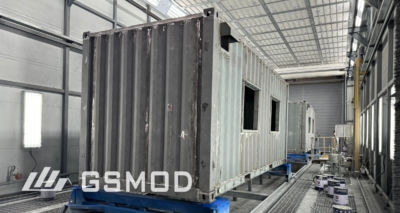


An energy storage container is a self-contained power infrastructure unit—a standard steel enclosure housing battery modules, power conversion systems, and control electronics, pre-integrated before leaving the factory. As grid operators and industrial facilities demand faster deployment and greater scalability, the containerized format has become the dominant delivery method for battery energy storage worldwide. This article explains what goes inside, how the charge-discharge cycle works, where these systems are deployed, and why the enclosure design is as critical as the cells inside it.
What an Energy Storage Container Actually Is
An energy storage container is more than batteries in a box. It is a pre-engineered system that integrates battery modules, a Battery Management System (BMS), a Power Conversion System (PCS), an Energy Management System (EMS), and thermal management and fire safety equipment into a single, factory-tested unit. It arrives on site ready to connect—no field integration of components, no commissioning of systems that have never operated together.
The standard housing is a 20-foot or 40-foot steel container, modified for permanent power infrastructure deployment. Unlike custom-built BESS installations assembled piece by piece on site, a containerized unit brings the factory floor to the project—everything tested and validated before the first delivery route is planned.
Modular Energy Storage System deployments increasingly rely on this format because it decouples system integration from site conditions.
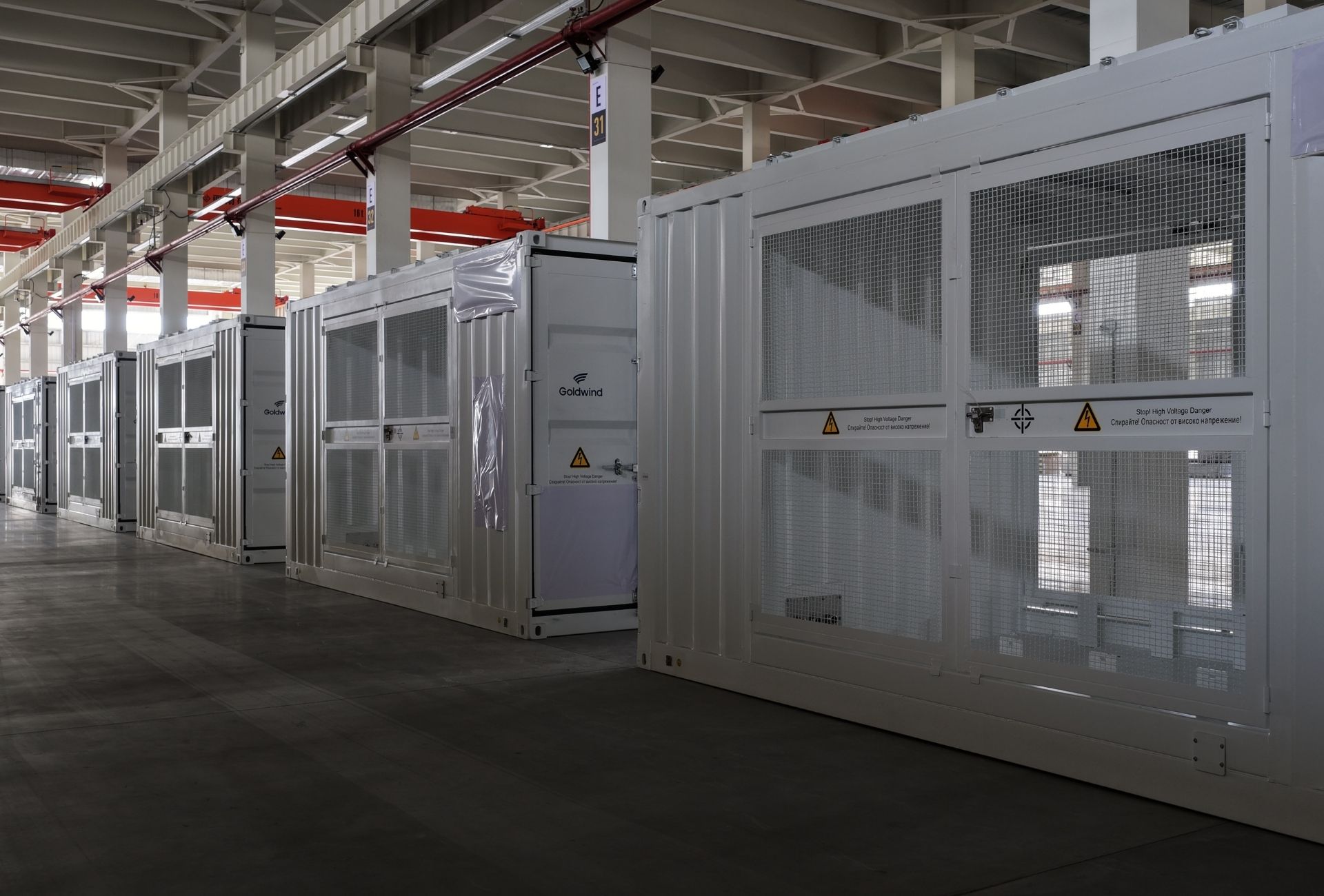
Key Components Inside an Energy Storage Container
Battery Modules and Battery Management System (BMS)
Battery modules are the core of the system—racks of rechargeable cells arranged to deliver the required capacity and voltage. Lithium Iron Phosphate (LFP) chemistry has become the industry standard for stationary storage due to its long cycle life, thermal stability, and safety profile. The BMS monitors every cell continuously: voltage, current, temperature, state of charge (SoC), and state of health (SoH). When any parameter moves outside safe limits, the BMS acts—reducing charge rate, triggering cooling, or disconnecting the pack entirely.
Power Conversion System (PCS)
Batteries store energy as Direct Current (DC). The PCS converts that DC into the Alternating Current (AC) that grids and industrial loads require. Bidirectional inverters allow energy to flow both ways—into the battery during charging and out during discharge. The PCS also regulates output voltage and frequency to meet grid interconnection standards.
Energy Management System (EMS)
The EMS is the decision layer. It receives grid signals, energy price data, and internal system status, then determines when to charge, when to discharge, and at what rate. In a commercial application, it schedules overnight charging and morning peak discharge automatically. In a utility application, it responds to grid frequency deviations in real time.
Thermal Management and Safety Systems
Heat is the primary driver of battery degradation and the trigger for thermal runaway in lithium-ion chemistries. Thermal management systems maintain internal temperatures within the 15–35°C operating band where LFP cells perform optimally. Safety systems add smoke and gas detection, controlled ventilation, and fire suppression. Installation requirements for stationary energy storage systems are governed by NFPA 855, which sets minimum clearances, suppression requirements, and hazard mitigation standards.
How an Energy Storage Container Works
Charging — From Grid or Renewable Source
The EMS signals the PCS to draw power from an available AC source—the grid, a solar array, a wind turbine, or a generator. Charging typically happens during off-peak hours when electricity prices are lowest, or when renewable generation exceeds immediate load demand. The BMS monitors each cell throughout, preventing overcharging and managing thermal load.
Storing — Holding Energy Safely
Once charged, the battery holds energy in chemical form. The BMS continues monitoring SoC and SoH during idle periods. LFP cells have a low self-discharge rate, making them practical for both daily cycling and extended standby applications.
Discharging — Delivering Power on Demand
When energy is needed, the EMS commands discharge. The battery releases stored DC energy through the PCS, which converts it to AC and delivers it to the load, the grid, or both. In frequency regulation applications, the system can respond within milliseconds to sub-seconds—far faster than any conventional generator.
What Energy Storage Containers Are Used For
Grid-Scale and Utility Applications
At the utility scale, energy storage containers perform frequency regulation, peak shaving, and renewable energy firming. Frequency regulation requires sub-second response—a capability that only battery storage can deliver reliably at scale. As the IEA highlights, energy storage is essential for integrating high shares of variable renewables without compromising grid stability. A single utility project can involve dozens of containers operating as a unified system, coordinated by a shared EMS.
Commercial and Industrial Use
Commercial and industrial operators use energy storage containers to reduce peak demand charges, provide backup power during outages, and store self-generated solar energy for later use. A modular construction company or manufacturing facility with predictable load profiles can use a containerized system to flatten daily demand peaks—reducing electricity costs without changing operations.
Off-Grid and Remote Power
In remote locations, islands, or post-disaster settings where grid connection is unavailable, energy storage containers serve as the backbone of a microgrid. They store energy from local renewable sources and dispatch it on demand, providing stable power independent of the main grid. The containerized format suits remote deployment well—units can be transported to almost any location and commissioned with minimal site infrastructure.
Capacity, Sizing, and Scalability
The most common container sizes are 20-foot and 40-foot units. A standard 40-foot energy storage container typically houses between 2 and 4 MWh of capacity, depending on the battery chemistry and cell configuration. A 20-foot unit holds roughly half that.
The scalability of containerized systems comes from modularity. A project can begin with a single container and expand by adding units in parallel as energy demands grow—from a few hundred kilowatt-hours for a commercial facility to several hundred megawatt-hours for a utility-scale installation. System-level performance and safety are typically validated through UL 9540 certification, which covers the fully integrated unit rather than individual components.
Why the Enclosure Design Matters
The enclosure is not packaging. It is the system’s operating environment—and its design determines whether everything inside performs to specification over a 15-to-20-year service life.
Structural Integrity and Environmental Sealing
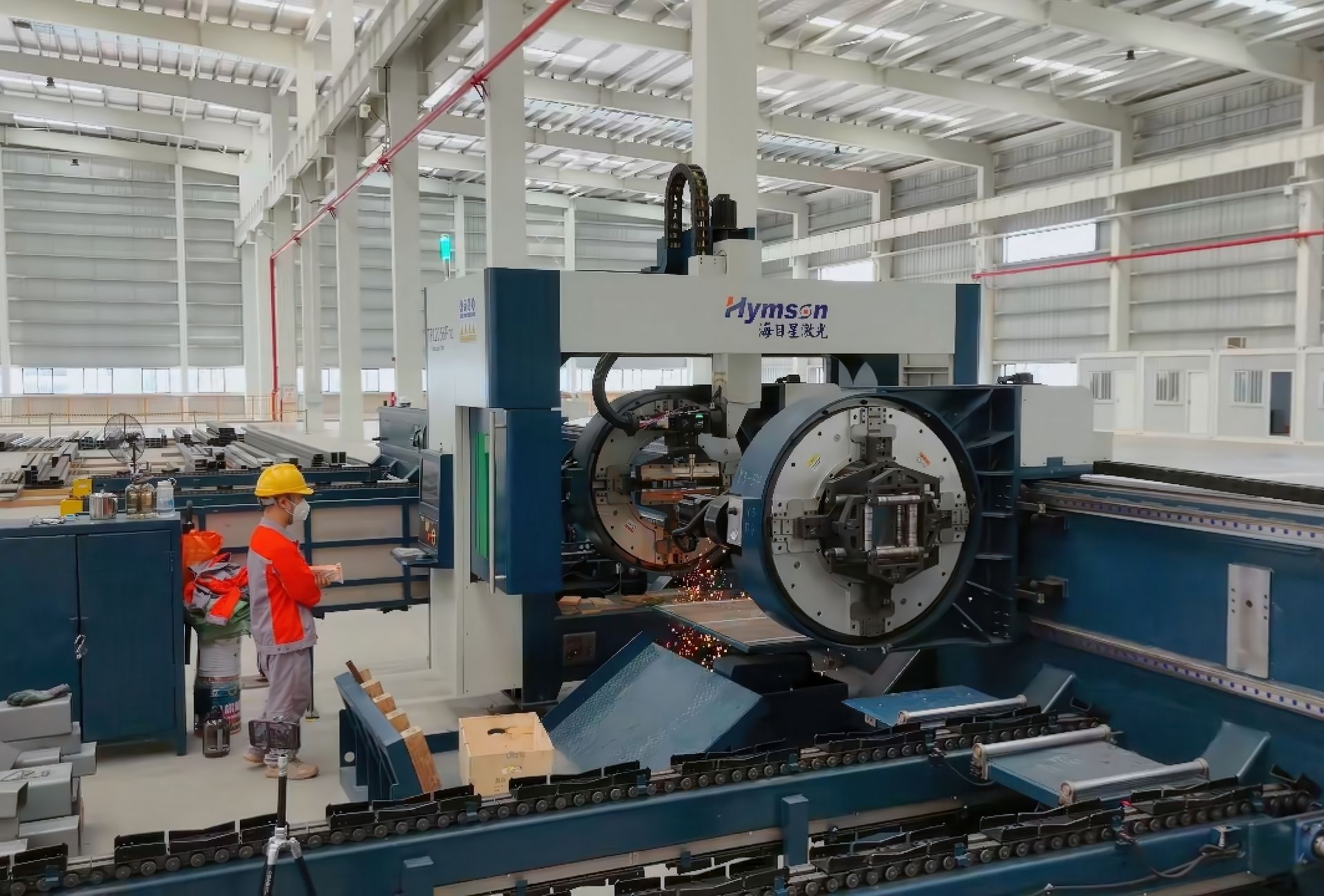
An energy storage container must carry the full load of its internal components and transfer that load to foundation points. The structural frame must handle transport stresses, crane lifts, and permanent ground loads without deformation. Environmental sealing—dust and moisture protection to an appropriate IP rating—prevents ingress that degrades electrical components over time. Steel energy storage containers engineered for permanent industrial deployment combine structural steel framing with sealed enclosures and integrated cable management.
Fire Containment and Thermal Readiness
The enclosure must be designed to contain a thermal event—not just suppress it after it starts. Fire-rated internal materials, integrated suppression mounting points, and ventilation pathways that prevent heat accumulation under normal operation are all enclosure-level decisions. These should be built into the container before it leaves the factory. Retrofitting them on site adds cost, extends commissioning time, and introduces integration risk.
GS Modular Energy Storage Container Solutions
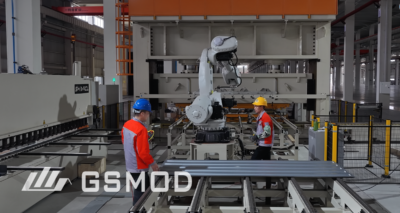
GS Modular designs and manufactures containerized solutions for energy infrastructure projects, with a production base of nearly 70,000 square meters in Foshan, China, and over 25 years of manufacturing experience. All products are manufactured under ISO 9001, ISO 14001, and ISO 45001 certifications, with an annual production capacity exceeding 10,000 units.
Energy Storage Containers — Containerized BESS enclosures for industrial and utility-scale applications, pre-assembled with integrated BMS, PCS, thermal management, and fire protection. Factory-tested and plug-and-play ready for deployment.
Data Center Containers — Modular enclosures for data center infrastructure, with power management and cooling systems integrated at the factory.
High & Low Voltage Distribution Systems — Containerized electrical distribution infrastructure for grid-connected and off-grid applications.
Photovoltaic & Wind Power Equipment Containers — Dedicated enclosures for solar and wind generation equipment, designed for outdoor installation across diverse environments.
Conclusion
An energy storage container is a complete power infrastructure unit built on the principle that factory integration is more reliable than field assembly. The cells, BMS, PCS, EMS, thermal management, and safety systems form a validated whole—and the enclosure is what makes that validation possible before the unit reaches any site.
Evaluating a containerized system starts with the enclosure specification: structural rating, thermal management design, fire containment capability, and IP protection level. GS Modular manufactures factory-tested steel energy storage containers for industrial and utility-scale deployment.
FAQ
What is the difference between an ESS container and a BESS?
A BESS refers to the complete energy storage system—batteries, BMS, PCS, EMS, and associated equipment. An ESS container is the physical format: a steel enclosure that houses and integrates all BESS components into a single factory-tested unit. All ESS containers are a form of BESS; not all BESS installations are containerized.
How many MWh can a single energy storage container hold?
A standard 40-foot container typically holds 2–4 MWh depending on battery chemistry and configuration. A 20-foot unit holds roughly half that. Multiple containers connect in parallel to scale capacity to project requirements.
Can energy storage containers be expanded after installation?
Yes. Additional units connect in parallel to increase capacity without modifying existing containers. Most projects pre-plan expansion from the outset, sizing electrical infrastructure for the eventual full installation.
What certifications should an energy storage container meet?
Key certifications include UL 9540 for the integrated system, NFPA 855 compliance for installation, and IEC 62619 for battery cell safety. Specific requirements vary by country and project type—confirm with the local authority having jurisdiction (AHJ).