


Before You Pay a Modular Home Manufacturer: 8 Things Australian Buyers Should Check
Buying a modular home in Australia is a significant financial commitment. Before you transfer a deposit or commit to a payment schedule, there are eight things every Australian buyer should clarify. This guide focuses on permanent volumetric modular homes – three-dimensional modules manufactured in a factory, transported to site and installed in position. Other prefabricated housing systems may follow different arrangements.
Here is what to check before you pay.
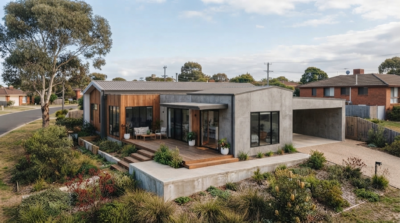
1. Who Are You Actually Paying?
The name on the website may not be the legal entity on your agreement. Before making any payment, confirm the contracting party.
Check that the legal entity named in your agreement is consistent with the entity on the invoice and payment instructions. Where builder licensing or registration is required for the work, confirm the details relevant to the contracting or building party. In some cases, the manufacturer and the builder may not be the same entity – and that distinction matters for who is responsible for what.
If you are still comparing suppliers, see our guide to evaluating a modular building manufacturer for Australian projects.
| What to check: Compare the agreement, the invoice and the payment instructions. Are they all in the same name? If not, ask for an explanation in writing before you pay. |
2. What Are You Paying For – and Under What Agreement?
Not every payment is made under the same type of agreement. An upfront payment can mean different things. It may cover preliminary design work or a site assessment, or it may be a deposit or progress payment under a building contract.
Before paying, understand both what the payment covers and the agreement under which it is being made. Is this a preliminary fee for design services? Is it a deposit on the building contract? Is it a progress payment tied to a specific stage of work?
| What to check: Ask for a written description of what each payment is for and which agreement applies. If the answer is unclear, pause and ask again. |
3. What Is Included in the Quoted Price?
A price for the modular home itself may not represent the total amount needed to complete the project. Before you pay, confirm what the quoted price actually includes.
For a volumetric modular home, useful items to clarify include:
- The home or module supply
- Internal finishes and fixtures
- Delivery to your site
- Crane hire and installation
- Foundations, site works and utility connections
| What to check: Ask for a written list of inclusions and exclusions. A price that looks competitive may leave significant project costs outside the quoted scope, so make sure those costs are identified before you commit. |
4. When Are the Next Payments Due?
Payment schedules vary by contract and project. What matters is understanding when the next payment is triggered and what must happen before it is due.
Is the next payment triggered by a calendar date? A milestone? Completion of a specific stage of work? Is it tied to a written invoice or payment request?
| What to check: Review the payment schedule in your contract and the requirements that apply in your state or territory. Identify each payment amount and the contractual stage, milestone or deliverable that triggers it, and make sure the written payment schedule is clear before you commit. |
5. What Does the Quoted Build Time Actually Cover?
A quoted timeframe such as “12 weeks” can mean very different things depending on where the clock starts and stops.
Does the quoted build time cover:
- Design and pre-production?
- Factory manufacturing only?
- Manufacturing plus transport?
- Transport and installation?
- The entire project through to handover?
| What to check: Ask the manufacturer to specify exactly what the quoted timeframe includes and what sits outside it. The written quotation should clearly state what the timeframe covers and which stages sit outside it. |

6. Who Organises Transport and Crane Installation?
Modular homes do not install themselves. Before you pay, confirm who is responsible for each part of the delivery and installation process.
Key questions to ask:
- Who arranges transport from the factory to your site?
- Where does delivery responsibility end?
- Who arranges the crane?
- Who coordinates unloading and placement?
- What happens if site access creates a problem?
| What to check: Get a written answer about who handles each of these responsibilities. Oversize transport or difficult site access may require additional planning – and additional cost. |
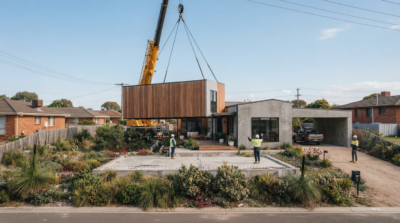
7. Is Your Site Ready for the Home?
A module being ready does not automatically mean the site is ready to receive it. Depending on the project and installation sequence, site-readiness requirements may include:
- Required approvals or permits for the relevant stage
- Foundations ready for module installation
- Utility connection points and site services coordinated
- Suitable delivery access
- Adequate crane and staging space
| What to check: Confirm site-readiness requirements with the party responsible for site works and installation, whether that is the manufacturer, builder, installer or project team. Site works and factory production may be able to run in parallel where approvals, design release and project sequencing allow, but their timing still needs to be coordinated. |
8. Who Do You Contact If Something Changes?
Projects can change – whether through design, scope, price, delivery timing or site conditions. What matters is knowing who to contact and how changes are documented.
| What to check: Before you pay, ask: Who is the single point of contact for changes? Who confirms changes? Are changes documented in writing? Important changes to scope, price or timing should be documented clearly rather than relying only on informal conversations. |
A 2-Minute Check Before You Pay
Before you make a payment, run through this checklist:
☐ I know which company I am paying.
☐ I know what this payment is for.
☐ I know what is included in the quoted price.
☐ I understand when future payments are due.
☐ I know what the quoted build time covers.
☐ I know who arranges transport and installation.
☐ I know whether my site is ready.
☐ I know who to contact if something changes.
If you cannot check every box, ask more questions before you pay.
Frequently Asked Questions
What should I check before paying a modular home manufacturer?
Check the eight items listed above: who you are paying, what the payment covers, what is included in the price, when future payments are due, what the build time covers, who handles transport and installation, whether your site is ready, and who to contact if something changes.
How much deposit should I expect to pay for a modular home in Australia?
There is no single deposit rule that applies to every modular home transaction across Australia. Deposit limits and payment rules can vary by state or territory, contract type and the nature of the work. In some jurisdictions, specific rules may also apply where a substantial proportion of the work is manufactured or fabricated off site. Check the rules that apply to your agreement with the relevant state or territory regulator before paying.
Is the quoted price the total cost of a modular home project?
Not necessarily. Site works, foundations, transport, installation, utility connections and approvals may be priced separately or sit outside the manufacturer’s quoted scope. Always ask for a written breakdown of what is included and what is not.
Does a modular home arrive ready to live in?
It depends on the factory completion level, project scope and remaining site works. Structural connections, services connections, local site works, approvals and final inspections may still be required after installation.
Who is responsible for transporting and installing a modular home?
It depends on the agreed contract and delivery scope. Some manufacturers arrange transport and installation; others provide module supply only, with transport and installation arranged separately. Confirm this in writing before you pay.
What questions should I ask a modular home manufacturer before signing?
Ask about: who you are contracting with, what is included in the scope, the payment schedule, the build timeframe, delivery and installation responsibilities, site readiness requirements, and who to contact if something changes. Get the key scope, payment and responsibility details confirmed in writing.
How This Guide Was Prepared
| This guide combines practical volumetric modular project considerations with current consumer guidance from Australian government regulators. Contract, deposit, licensing and approval requirements can vary by state or territory. |
Requirements for contracts, deposits, licensing and approvals vary by state and territory. Check the requirements that apply in your state or territory before making any payment. This guide is for informational purposes and does not constitute legal advice.
Australian Consumer and Building References
- Australian Consumer Law – Consumer Protection Agencies– State and territory consumer protection agencies.
- NSW Government – Contracts for residential building work– Written contracts, deposits, progress payments and contract essentials in NSW.
- Consumer Affairs Victoria – Deposits and payments for building work– Current Victorian guidance on deposits and progress payments.
- Queensland Building and Construction Commission (QBCC) – Deposits and progress payments– Queensland guidance on deposit limits, progress payments and limited off-site fabrication exceptions.
- ACCC – False or misleading claims– Consumer-facing claims about prices, descriptions, shipping options and delivery times.

Vincent Y.N. Mak
16 years of experience in modular architecture, MiC construction and international modular project management.