

The global real estate market is growing at record speed, with residential and commercial projects being launched in unprecedented numbers. Yet behind this growth lies a set of challenges: volatile supply chains, rising costs, and increasing pressure to meet climate and regulatory goals. Traditional building materials like cement, steel, and timber have long supported the industry, but their environmental impact and unstable sourcing are forcing change. For clients in large-scale construction, the question is no longer whether sustainable alternatives will play a role, but how quickly they can be adopted. This article explores the materials and methods shaping the future of construction, the challenges and opportunities they bring, and the value they offer for scaled-up projects.
Rethinking Traditional Supply
Construction has always depended on natural resources, but sourcing them has become more complex. Trade disputes, shifting international agreements, and geopolitical tensions have disrupted the flow of timber and steel. Cement production remains carbon-heavy, while global demand for wood has created sourcing concerns. These realities underline the need for new approaches that balance availability with sustainability.
Emerging Materials And Methods
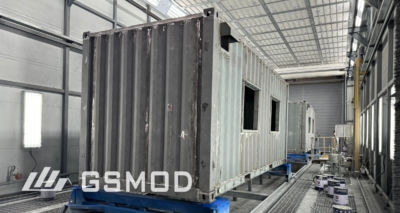
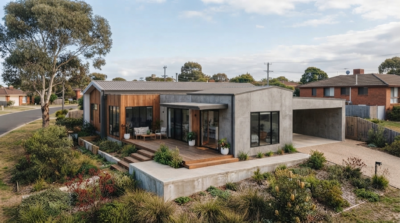
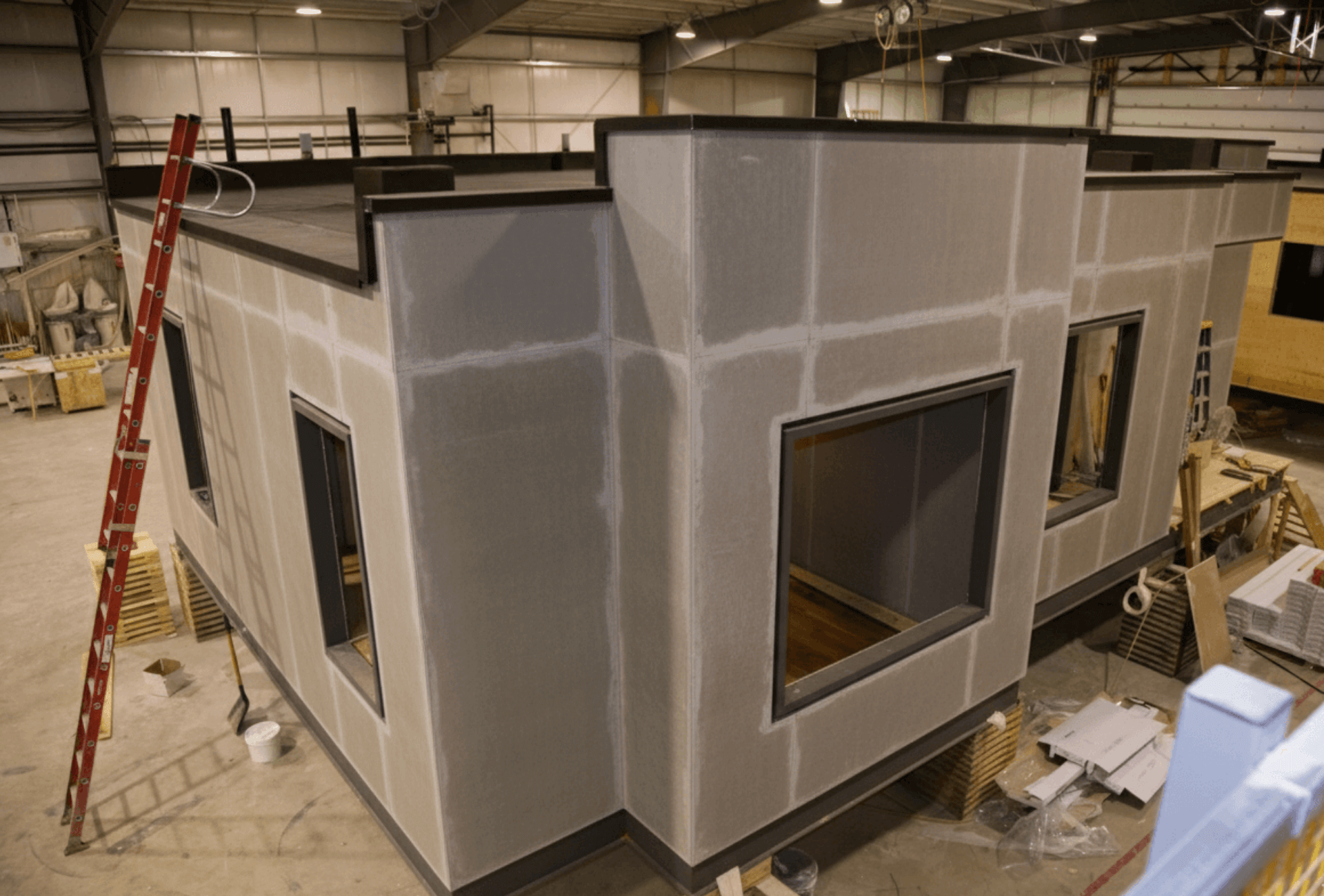
In response, the construction industry is shifting toward solutions that combine performance, efficiency, and environmental responsibility. Modular and prefabricated systems are no longer niche—they are becoming mainstream, particularly for large-scale developments where speed, cost predictability, and reduced waste matter most. In modular projects, materials can also be managed in controlled factory settings, reducing waste and ensuring consistent quality, while still allowing custom design to meet specific environmental standards.
Modular construction now offers strength, flexibility, and efficiency using sustainable materials. Modular systems also allow for customizing certain environmentally friendly components to meet client requirements. This flexibility means projects can remain efficient while meeting environmental goals.
The development of sustainable materials in the future also includes:
- Fair-faced cement panels – Offering a strong, weather-resistant exterior surface that requires no additional finishing, reducing labor and on-site resource use.
- Rock wool insulation – Produced from natural minerals, rock wool provides exceptional fire safety, thermal insulation, and soundproofing, while being recyclable and non-toxic.
- Calcium silicate boards – Used as inner or protective layers for walls, these boards are lightweight, moisture-resistant, and dimensionally stable.
- PE waterproof and breathable membrane – Prevents external water intrusion while allowing vapor to escape, ensuring durability and comfort across climates.
- Galvanized steel frame – The structural backbone of modular systems, offering strength, corrosion resistance, and recyclability.
- Sintered stone panels – Used as surface finishes, they combine the beauty of natural stone with superior durability and minimal maintenance requirements.
Together, these materials form a sustainable dry-wall system that supports faster installation, consistent quality, and measurable environmental benefits. Compared to traditional construction, this approach reduces water consumption, shortens schedules, and cuts waste by up to 60%, aligning perfectly with modern sustainability objectives.
Driving Industry Transformation
The shift toward sustainable and modular construction is driving a fundamental transformation in how projects are planned, built, and managed. Traditional, site-dependent workflows are giving way to digitalized, factory-based production models that emphasize precision and resource efficiency.
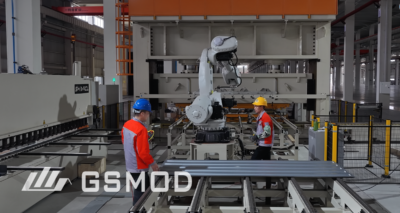
Building Information Modeling (BIM), digital twins, and data-driven design now allow developers to simulate performance, optimize material use, and ensure every component meets sustainability standards before production begins. Combined with automation and robotics, these tools make modular construction not only faster but also more transparent and measurable in its environmental impact.
This digital transformation marks a new era of accountability and efficiency in construction—one where sustainability is built into every stage of the process, from design to delivery.
FAQs
- Are modular dry construction materials suitable for large projects?
Yes. Modular systems using steel frames, rock wool insulation, and cement wall panels have been successfully applied in large-scale developments, combining strength, fire safety, and consistent performance. - Do sustainable materials increase overall project costs?
Not necessarily. While upfront material costs may be higher, reduced on-site waste, shorter build times, and lower maintenance often result in significant lifecycle savings. - How does dry construction improve sustainability?
It eliminates wet processes, reduces on-site pollution, minimizes material waste, and promotes the use of recyclable, energy-efficient materials. - Can modular systems meet specific environmental standards?
Yes. Modular wall systems can be customized to meet fire resistance, insulation, and energy-efficiency requirements in different regions and climates. - Why is modular construction key to sustainable development?
It combines precision manufacturing with flexibility, making it easier to control quality, reduce carbon emissions, and scale up sustainable practices efficiently.
Conclusion
The shift toward modular and dry construction marks a defining moment in the evolution of modern building. By integrating durable and sustainable materials into efficient factory-built systems, the industry is creating structures that are stronger, cleaner, and more environmentally responsible.
This transformation goes beyond replacing materials—it redefines how buildings are conceived and delivered. With every project, modular systems prove that sustainability and performance can coexist, offering measurable benefits in cost, quality, and environmental impact.
As more developers embrace these solutions, modular construction is setting a new benchmark for the global industry—building faster, smarter, and greener for generations to come.