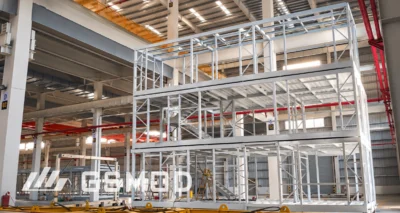


Evaluating a modular building manufacturer for an Australian project involves more than comparing price, production capacity and previous projects. Buyers also need to understand the manufacturer’s quality systems, engineering capability, compliance evidence and role in the project delivery chain.
Because modular projects divide design, off-site manufacture, transport, installation and certification across different parties, responsibilities must be defined clearly. Licensing and practitioner requirements also vary by state and territory. This guide explains the main factors Australian buyers should examine when assessing a modular building manufacturer, while distinguishing factory capability from project-specific NCC compliance and statutory approval.
Five Areas to Evaluate
| Area | What to examine |
| Project role and licensing | Who is responsible for design, manufacture, site work, licensing and compliance certification? |
| Engineering capability | Are structural designs prepared by appropriately qualified engineers who hold the registrations required by the project jurisdiction? |
| Compliance evidence | What Evidence of Suitability, test reports or product certifications support the proposed system? |
| Factory quality management | Does the manufacturer operate documented quality systems, traceability and inspection procedures? |
| Delivery and interface capability | Are transport, lifting, module connections and foundation interfaces appropriately engineered? |
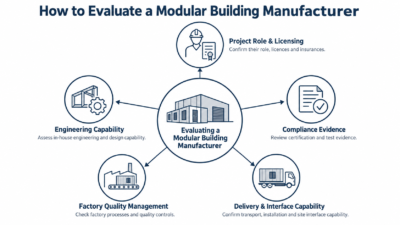
Five areas to examine when evaluating a modular building manufacturer for an Australian project
What Manufacturer Qualifications Actually Matter?
Not all manufacturer credentials carry equal weight in the Australian regulatory context. Procurement teams, developers and head contractors should distinguish between credentials relevant to project compliance and credentials that primarily demonstrate internal process capability. The following areas warrant particular attention.
Manufacturing Quality Systems
A structured Quality Management System can support consistent manufacturing output and documented quality control. ISO 9001:2015 is a widely recognised quality management standard and can provide useful evidence that a manufacturer operates a documented QMS. ISO 9001 certification indicates that the manufacturer operates under a systematic approach to quality management, including documented procedures, continuous improvement protocols and defect prevention measures. However, ISO 9001 demonstrates process capability—not product conformity to specific NCC Performance Requirements. It should not be treated as a substitute for project-specific compliance evidence.
Engineering Capability
Engineering services should be provided by an appropriately qualified engineer who holds any registration required by the jurisdiction in which the project is located. CPEng or NER credentials may support competency assessment, but they do not replace jurisdiction-specific statutory registration where such registration is required. The engineering documentation should address the NCC requirements and the structural standards applicable to the adopted structural system and project design, which may include the relevant parts of AS/NZS 1170 and, where applicable, standards such as AS 4100 or AS 3600.
Product and Material Evidence
Where evidence is required to demonstrate that a material, product, form of construction or design is suitable for its intended NCC use, the evidence should satisfy the applicable Part A5 requirements. This evidence may take the form of reports from an Accredited Testing Laboratory, where applicable. This may include NATA-accredited laboratories where the accreditation and scope satisfy the applicable NCC evidence requirements. Other forms include product technical statements or third-party product certifications.
Project-Specific Compliance Documentation
Manufacturers should be able to produce project-specific documentation demonstrating that the modular design, materials, manufacturing process and finished modules comply with the relevant NCC Performance Requirements. Generic certifications do not substitute for project-specific compliance evidence. Demonstrating NCC compliance for modular buildings follows the same process as for other buildings, requiring compliance with the NCC Governing Requirements and relevant Performance Requirements through a Deemed-to-Satisfy (DTS) Solution, a Performance Solution or a combination thereof. For detailed technical guidance, see [NCC Class 5 Modular Office Buildings: Compliance Requirements in Australia].
Relevant Contractor and Practitioner Licensing
Licensing requirements for modular construction vary by jurisdiction and depend on whether the entity is acting as manufacturer, builder or installer. A manufacturer operating solely from a factory may not require a builder’s licence in all states. Where licensing or practitioner registration is required for the relevant work, the entity or practitioner performing that work must hold the applicable licence or registration in the project jurisdiction.
Manufacturer, Builder and Installer Are Different Roles
A common source of confusion in modular procurement is the conflation of manufacturer, builder and installer roles. Each carries distinct responsibilities and licensing obligations under Australian building law.
Manufacturer Responsibilities
Depending on the contractual and regulatory role, a manufacturer’s responsibilities may include production quality control, material traceability, dimensional control and provision of documentation needed to support project compliance assessment.
Builder and Contractor Responsibilities
The builder or head contractor typically coordinates the site-based construction process and interfaces with designers, subcontractors and approval practitioners. The precise statutory and contractual responsibilities depend on the project delivery model and jurisdiction. Building approval and compliance certification are undertaken through the relevant jurisdictional approval and certification framework.
Installer and Site Contractor Responsibilities
Site contractors undertake on-site assembly, connection of modules, foundation works and integration of services. Specialised trades—including electricians, plumbers and structural steel erectors—must hold the appropriate licences and certifications for their respective trades where required by the jurisdiction.
Why Licensing Depends on the Project Role
A manufacturer supplying modular units to site does not necessarily require a builder’s licence if its role is confined to factory production. However, if the manufacturer also undertakes site-based building work, the entity and relevant practitioners must satisfy any licensing or registration requirements applicable to that work in the project jurisdiction. This distinction is particularly relevant for overseas manufacturers supplying Australian projects. For overseas manufacturers, Australian site-based building work must be carried out under the licensing and practitioner requirements applicable in the relevant jurisdiction. Depending on the project structure, this may involve engaging an appropriately licensed or registered Australian builder or contractor.
State and Territory Licensing Requirements
Licensing requirements for building work—including modular and prefabricated construction—are regulated at the state and territory level. Each jurisdiction maintains its own licensing framework, and manufacturers, builders and installers must hold the appropriate credentials for the jurisdiction in which the building is installed.
New South Wales
NSW enacted the Building (Approvals and Practitioners) Act 2026, which received assent on 14 August 2026. Relevant reforms will commence once the associated regulations are developed, so current commencement status and project-specific requirements should be checked before procurement or approval. The Act defines “prefabricated buildings” as a substantially complete building or room manufactured away from the building site, or a modular building component that will become a building element when installed and cannot be inspected without destructive testing once on-site. The Act establishes a framework for prefabricated building declarations and prefabricated building instructions covering transport, erection and design requirements. Builder licensing in NSW is administered by NSW Fair Trading.
Victoria
Victoria regulates building practitioners through the Building and Plumbing Commission (BPC). Professional engineer registration is governed through Victoria’s separate professional engineer registration framework where applicable. Building practitioners are registered in relevant categories and classes. For commercial projects, this may include the applicable Commercial Builder registration class. Practitioners must also satisfy the legislation, registration conditions and project requirements relevant to their role.
Queensland
Queensland’s building licensing regime is administered by the Queensland Building and Construction Commission (QBCC). Modular builders and contractors must hold the appropriate QBCC licence class for the scope of work undertaken. The QBCC also regulates non-conforming building products and associated evidence and information obligations under Queensland law.
Western Australia
Western Australia regulates builder registration and building-related licensing through Building and Energy within the current state regulatory framework. Manufacturers and builders supplying modular buildings to WA projects must comply with WA-specific licensing and certification requirements.
Other State and Territory Requirements
The Australian Capital Territory, South Australia, Tasmania and the Northern Territory each administer their own building licensing regimes. Procurement teams should verify licensing requirements with the relevant building authority in the jurisdiction where the building will be installed.
Factory Quality Management
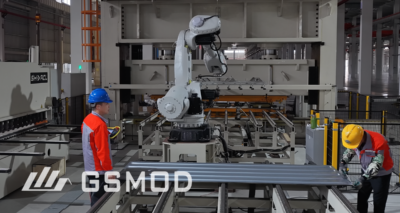
Steel processing and production activity at the GS MOD modular building factory.
Factory quality management systems can support consistent production and provide records relevant to project compliance assessment. When evaluating a manufacturer, buyers should assess whether the manufacturer operates a documented QMS. Relevant indicators may include material traceability, Inspection and Test Plans (ITPs), non-conformance management and dimensional control.
ISO 9001:2015 can be a useful indicator of a structured quality management system, but it should not be treated as a substitute for project-specific compliance evidence. It demonstrates process capability—not product conformity to NCC Performance Requirements.
For detailed factory verification procedures, see the [Modular Building Factory Audit Checklist for Australian Projects].
Structural Steel and Fabrication Capability
Where structural steel forms part of the primary load-bearing system, buyers should confirm that fabrication is supported by appropriate welding procedures, qualified personnel, material records and inspection documentation relevant to the adopted structural system and project requirements. Applicable standards depend on the adopted structural system, NCC references and project specification, and may include AS 4100, the applicable AS/NZS 1554 welding standard and AS/NZS 5131.
Detailed verification of welding procedure specifications (WPS), welder qualifications, material certificates and corrosion-protection records should be undertaken through the factory audit process. For further guidance, see the [Modular Building Factory Audit Checklist for Australian Projects].
Engineering and Design Capability
Modular design requires particular attention to interfaces and temporary conditions that may be less prominent in conventional site-based construction, including module connections, lifting, transport and installation.
Structural calculations should be prepared by an appropriately qualified engineer who holds any registration required by the jurisdiction in which the project is located. The structural calculations should address the applicable NCC requirements and design standards relied upon for the adopted structural system and compliance pathway. These may include relevant parts of AS/NZS 1170 and, where applicable, standards such as AS 4100, AS 3600 or other relevant standards. Calculations should address all load combinations, including dead loads, live loads, wind loads and earthquake actions.
The structural design should account for site-specific wind actions determined under the applicable design standard, including relevant regional wind speed, terrain, shielding, topographic and building-height effects. The engineering design should assess relevant temporary actions associated with lifting, transport and installation based on the proposed logistics and lifting methodology. Lifting points, lifting configurations and temporary support arrangements should be engineered for the relevant temporary actions and handling conditions.
Inter-module and module-to-foundation connections should be designed to transfer the relevant design actions in accordance with the adopted structural system and load path. Modular buildings require engineered foundation interfaces, and manufacturers should provide interface drawings and design information to enable site-based foundation design.
Detailed verification of calculations, lifting design, connection details and foundation interfaces should be undertaken through the factory audit process. See the [Modular Building Factory Audit Checklist for Australian Projects] for further guidance.
Evidence of Suitability for Australian Projects
NCC Part A5 sets out forms of Evidence of Suitability that may be used to demonstrate that relevant materials, products, forms of construction or designs are suitable for their intended use. Where a Performance Solution is proposed, the NCC provides separate assessment methods for demonstrating that the relevant Performance Requirements are satisfied. For modular projects, the required evidence may need to address relevant aspects of the design, materials, off-site manufacture and completed modules, depending on the proposed system, compliance pathway and approval strategy.
Buyers should verify what evidence the manufacturer provides to support project compliance. For detailed guidance on evidence requirements and state-specific approval pathways, see [Modular Office Building Approval in Australia: Evidence, Documentation and State Pathways].
CodeMark Certificates Where Applicable
CodeMark is a voluntary third-party building product certification scheme administered by the Australian Building Codes Board (ABCB). The scheme is owned by the Commonwealth of Australia acting on behalf of the Commonwealth and all States and Territories. Only JAS-ANZ accredited Certification Bodies can issue CodeMark Australia Certificates of Conformity.
A current CodeMark Certificate of Conformity may provide recognised evidence within the scope, conditions and limitations stated on the certificate. It does not by itself establish whole-building or project approval. Building approval remains the responsibility of the relevant certifier, building surveyor or approval authority, depending on the jurisdiction. The approval authority must assess whether the proposed building, including the CodeMark-certified product, complies with all applicable NCC requirements for the specific project. Certificates should always be checked for any limitations to ensure they cover the proposed use.
Accredited Test Reports
Reports from an Accredited Testing Laboratory may be required for certain products and performance characteristics. This may include NATA-accredited laboratories where the accreditation and scope satisfy the applicable NCC evidence requirements. Depending on the product, proposed use and evidence required by the project, buyers may seek independent third-party certification or accredited test evidence in addition to manufacturer documentation.
Engineer Certification
Structural engineering documentation should be prepared, reviewed or certified by appropriately qualified practitioners as required by the project and the applicable jurisdictional framework.
Product Technical Statements
NCC Part A5 allows other forms of documentary evidence to support Evidence of Suitability. The ABCB provides a Product Technical Statement template as one example of how relevant product information, supporting evidence, limitations and the basis of a compliance statement may be documented. Where a PTS is relied upon, buyers should consider whether it is relevant to the proposed use and supported by appropriate evidence.
Project-Specific Compliance Documentation
Project-specific compliance documentation may include CodeMark certificates, accredited test reports, engineering certifications, product technical statements and other documentary evidence relevant to the proposed use and accepted under the applicable NCC provisions.
What About MiC-MAS?
The Modular Integrated Construction Manufacturer Accreditation Scheme (MiC-MAS) is a Hong Kong-based manufacturer recognition scheme introduced by the Building Technology Research Institute (BTRi) on 15 November 2024. The scheme is owned by the Development Bureau of the Government of the Hong Kong Special Administrative Region. MiC-MAS is used within Hong Kong’s government MiC procurement and quality-assurance framework.
While MiC-MAS accreditation may provide some assurance of a manufacturer’s quality management systems and production capability, it is a Hong Kong scheme, not an Australian certification. MiC-MAS does not constitute evidence of NCC compliance and does not replace any Australian certification or approval requirements. Overseas manufacturers holding MiC-MAS accreditation must still satisfy the licensing, practitioner and approval requirements applicable to the project jurisdiction.
Factory Audit Checklist for Buyers
For higher-value or higher-risk procurements, buyers may consider a factory audit or other independent verification of manufacturing capability. A detailed checklist is available in the companion guide: [Modular Building Factory Audit Checklist for Australian Projects].
Questions to Ask Before Selecting a Manufacturer
Does the manufacturer hold ISO 9001:2015 certification? What other quality management certifications are held?
What engineering registrations are required for this jurisdiction, and who holds them?
What evidence of suitability does the manufacturer provide for NCC compliance?
Does the manufacturer hold a CodeMark Certificate of Conformity for the modular system? What are the limitations of the certificate?
How does the manufacturer ensure material traceability throughout the supply chain?
What welding procedures and welder qualifications are employed?
How does the manufacturer manage non-conformance and corrective action?
Which entity or practitioner is responsible for satisfying the building licensing or registration requirements applicable to the project jurisdiction?
For overseas manufacturers: how is NCC compliance demonstrated, and how will Australian site-based building work be carried out under the relevant jurisdiction’s licensing requirements?
What project-specific documentation is provided for transport, lifting, module connections and foundation interfaces?
FAQ
Is ISO 9001 enough for an Australian modular project?
No. ISO 9001 demonstrates quality management process capability but does not constitute evidence of NCC compliance for the finished modular building. Project-specific compliance evidence may include engineering documentation, relevant test reports and, where applicable, CodeMark certification or other forms of Evidence of Suitability, depending on the proposed system and approval strategy. For more detail, see [Modular Office Building Approval in Australia: Evidence, Documentation and State Pathways].
Does a modular manufacturer need Australian building licensing or registration?
It depends on the manufacturer’s role. A manufacturer whose role is confined to factory production does not necessarily require a builder’s licence. Where licensing or practitioner registration is required for the relevant work, the entity or practitioner performing that work must hold the applicable licence or registration in the project jurisdiction.
Can overseas modular manufacturers supply Australian projects?
Yes. Overseas manufacturers can supply Australian projects where the project demonstrates compliance with the applicable NCC requirements through the relevant compliance pathway and supporting evidence. For overseas manufacturers, Australian site-based building work must be carried out under the licensing and practitioner requirements applicable in the relevant jurisdiction. This may involve engaging an appropriately licensed or registered Australian builder or contractor. Structural engineering documentation should be prepared, reviewed or certified by appropriately qualified practitioners as required by the project and the applicable jurisdictional framework.
What is CodeMark?
CodeMark is a voluntary third-party building product certification scheme administered by the Australian Building Codes Board (ABCB). A CodeMark Certificate of Conformity is one of several options for meeting NCC evidence of suitability requirements. It does not replace project approval. See the Evidence of Suitability section above for more detail.
What is Evidence of Suitability?
Evidence of Suitability refers to the forms of documentary evidence recognised under NCC Part A5 for demonstrating the suitability of materials, products, forms of construction or designs for their intended use. It may include CodeMark certificates, reports from an Accredited Testing Laboratory (which may include NATA-accredited laboratories where the accreditation and scope satisfy the applicable NCC evidence requirements), engineer certifications and product technical statements. For detailed guidance, see [Modular Office Building Approval in Australia: Evidence, Documentation and State Pathways].
Is MiC-MAS an Australian certification?
No. MiC-MAS is a Hong Kong manufacturer recognition scheme introduced by the Building Technology Research Institute (BTRi). It does not constitute NCC compliance and does not replace Australian certification or approval requirements.
Does manufacturer certification guarantee project approval?
No. Manufacturer credentials—including ISO 9001, CodeMark and MiC-MAS—do not constitute project approval. Building approval remains the responsibility of the relevant certifier, building surveyor or approval authority, depending on the jurisdiction, who must assess whether the proposed building complies with all applicable NCC requirements for the specific project.
Sources and review date: Content checked against publicly available NCC, ABCB and relevant state and territory regulator sources in August 2026.
Disclaimer: Manufacturer credentials do not constitute project approval. Licensing, NCC compliance and certification requirements depend on the project role, location and applicable jurisdiction. This article is for informational purposes only and does not constitute legal or professional advice. Readers should consult with qualified legal and building professionals for advice specific to their projects.

Mont Duan
Experienced in modular building engineering, technical design and construction solutions, with a focus on delivering efficient and reliable modular building projects.