

Introduction
Modular hotel construction is increasingly recognised as a delivery approach across the hospitality sector. Rising construction costs, persistent labour shortages, and pressure to accelerate project delivery are prompting developers, resort operators, and hospitality groups to reassess conventional approaches. Within this evolving delivery landscape, modular hotel builders have become a recognised option—offering an alternative delivery model built on off-site manufacturing.
This article examines why hotels are well suited to modular hotel construction, what distinguishes professional modular hotel builders, how the modular construction process works, where modular hotels are being applied, and how developers can select the right partner.
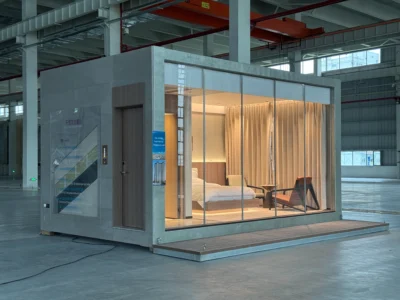
Why Hotels Are Suitable for Modular Construction
Several characteristics make hospitality projects well suited to off-site manufacturing approaches.
Standardised Room Layouts
To begin with, hotels typically feature consistent floor plans: guest rooms of identical dimensions, standardised bathroom configurations, and consistent MEP (mechanical, electrical, plumbing) distributions. This repeatability enables efficient factory production. Manufacturers can establish production lines for standardised room modules, achieving production efficiencies through repeatability and standardisation. The repetitive nature of hotel design also simplifies quality control, as the same processes are repeated across multiple units.
Design Optimisation and Project Planning Flexibility
However, modular hotel construction does not rely only on repetition. Successful projects require early coordination between architects, engineers and modular builders to optimise layouts, module dimensions, transportation requirements and operational needs.
In addition, hotels require efficient room planning but still need brand identity. Modular systems can support different façade treatments, finishes and layouts while maintaining the benefits of factory production. Early design decisions—including modular grid planning, BIM coordination and logistics routing—reduce the likelihood of changes during manufacturing that could affect cost or programme.
Building Information Modelling (BIM) and digital coordination improve integration between architecture, structure and building services. This collaborative approach allows project teams to address interface issues before factory production begins, helping reduce the potential for on-site modifications.
Hospitality-Specific Requirements
Hotel modules need to address performance criteria that distinguish hospitality projects from other building types.
First, acoustic performance. Hotels require effective acoustic separation between guest rooms, corridors and service areas to maintain guest comfort. Modular construction achieves this through coordinated wall, floor and ceiling assemblies designed to meet applicable sound transmission standards.
Second, fire and safety requirements. Hotel modules need coordinated fire separation strategies and compliance with applicable building requirements. This includes fire-rated compartmentation between units, appropriate means of egress, and integration with site-based fire suppression and detection systems.
Third, integrated building services. MEP integration is important because hotels require reliable heating, cooling, plumbing and electrical systems within compact room modules. Factory pre-installation allows testing of these systems before modules are transported to site.
What Makes a Professional Modular Hotel Builder?
Not all modular manufacturers are equally equipped to deliver hospitality projects. Professional modular hotel builders possess capabilities that distinguish them from general modular construction firms. Many modular hotel builders also operate as manufacturers, integrating design, engineering and factory production capabilities within a single organisation.
Engineering Capability
First, engineering capability. Hotel modules require sophisticated engineering to meet structural, acoustic, and fire-performance requirements. Professional builders employ licensed structural engineers, MEP consultants, and architectural designers who can coordinate complex building systems. Engineering capability includes the use of Building Information Modelling (BIM) for clash detection, coordination, and accurate prefabrication. BIM enables precise planning of MEP interfaces between modules, helping reduce the potential for on-site rework.
Manufacturing Capability
Second, manufacturing capability. This encompasses production capacity, quality-control systems, and the ability to deliver consistent output at scale. Professional builders typically operate facilities capable of producing hotel modules through structured manufacturing processes. They maintain rigorous inspection regimes, including multiple rounds of quality checks throughout the manufacturing process. Manufacturing capability also includes the capacity to integrate finishes, fixtures and selected interior elements during factory production, reducing the extent of on-site finishing work.
Delivery and Installation Capability
Third, delivery and installation capability. The logistics of transporting and installing hotel modules require specialised expertise. Professional builders manage transportation coordination, crane-lift planning, and on-site integration. They develop installation strategies that improve overall project efficiency. Installation capability includes coordination with on-site contractors to ensure that foundations, podium structures, and site utilities are ready when modules arrive.
How Modular Hotel Construction Works
The modular hotel construction process follows a structured sequence from concept to occupancy.
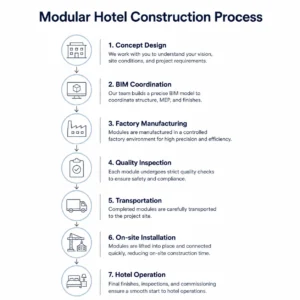
Concept Design and Planning
The process begins with concept design and planning. Architects, engineers, and the modular builder collaborate to develop designs that optimise module dimensions, transport logistics, and on-site assembly. All major decisions—including room layouts, MEP distributions, and finish selections—are finalised before factory production begins. This design-freeze is essential for efficient manufacturing.
Factory Manufacturing and Quality Inspection
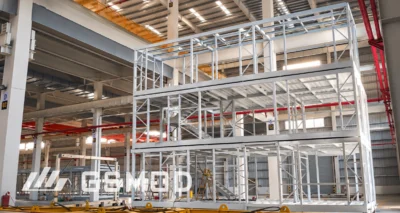
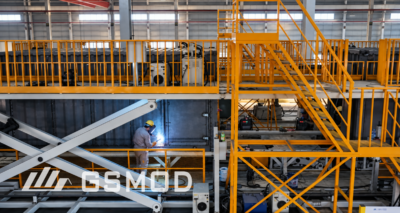
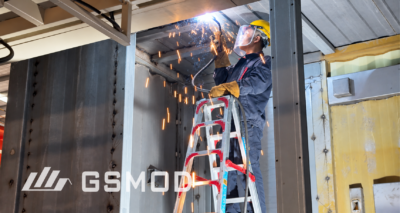
Once designs are finalised, factory manufacturing commences. Builders construct modules using steel framing, integrating structural, mechanical, electrical, and plumbing systems during production. Interior finishes, bathroom fit-outs and selected fixed elements may be installed in the factory depending on project requirements. Quality inspection occurs throughout the manufacturing process, verifying structural integrity, MEP functionality, finish quality, and compliance with design specifications.
Transportation and Installation
Crews transport completed modules to the site via road, rail, or sea. Upon arrival, they crane the modules into position onto prepared foundations or podium structures. Module installation can often be completed within a compressed timeframe, depending on project scale, site conditions and installation planning. On-site teams then complete final connections, weather sealing, and minor finishing works.
Where Modular Hotel Construction Is Being Applied
Modular hotel construction is being deployed across a range of hospitality typologies, with growing attention to environmental performance and resource efficiency.
For example, resort hotels in remote or eco-sensitive locations can benefit from modular construction’s reduced on-site footprint. By transferring a significant portion of construction activity to controlled factory environments, modular methods can help minimise disruption to sensitive ecosystems, reduce on-site waste generation, and lower the risk of environmental contamination during construction.
Similarly, in locations where local labour and materials are scarce, modular construction can reduce reliance on regional resources. Factory-based production enables more accurate material planning and controlled manufacturing processes, which can help reduce waste and improve resource efficiency. The ability to prefabricate components in a factory setting also improves logistics efficiency and supports controlled resource planning, as modules are shipped as complete assemblies rather than multiple smaller material deliveries.
In addition, boutique hotels can adopt modular construction while maintaining distinctive design through custom cladding, finishes and hybrid layouts. Modular systems can also support long-term adaptability through replaceable components and flexible planning approaches, extending the building’s useful life and reducing the need for full demolition and reconstruction when refurbishment is required.
Likewise, extended-stay hotels, with repeatable room layouts and standardised configurations, are often considered suitable candidates for modular construction. The ability to relocate, repurpose or adapt modular units can support longer asset lifecycles and circular construction principles. Modular components can be disassembled and reused in other projects, reducing the demand for new raw materials and contributing to a more circular economy within the hospitality construction sector.
Beyond operational benefits, modular construction can also contribute to improved environmental outcomes through better quality control of building envelopes, which enhances thermal performance and supports lifecycle performance and sustainability objectives. Factory-controlled production further allows for more efficient use of insulation materials and air-sealing details, supporting long-term energy performance. Developers increasingly consider these factors when evaluating the overall sustainability credentials of modular hotel projects.
How to Choose the Right Modular Hotel Builder
Selecting the right modular hotel builder is critical to project success. Developers should evaluate potential partners across several dimensions.
Project Experience
First, evaluate the builder’s track record in hospitality projects. Hotel modules demand higher standards in acoustics, finishes, and MEP integration than residential or commercial modules. Request case studies of completed hotel projects and speak with previous clients to understand their experience regarding schedule adherence, quality outcomes, and post-installation support.
Manufacturing Capacity
Second, assess the builder’s production capacity, lead times, and ability to scale. Factory visits are recommended to observe production lines, inspect sample modules, and review quality documentation. Confirm that the builder’s capacity aligns with project timelines and volume requirements.
Engineering Support
Third, evaluate the builder’s engineering resources, BIM capability, and quality-management systems. Professional builders employ in-house engineering teams capable of handling complex structural, acoustic, and MEP integrations. BIM proficiency enables coordination and clash detection, reducing on-site rework.
Quality and Certification
Finally, verify the builder’s quality-management systems and certifications. Robust inspection and testing regimes help ensure that factory-completed elements meet design specifications. Confirm compliance with applicable building codes and approval requirements for the project location.
Conclusion
Modular hotel construction is changing how hotels are planned, manufactured, and delivered. By shifting construction from site-based to factory-based production, it can support faster project delivery, consistent quality, and reduced on-site disruption. Hotels are particularly suitable for modular hotel construction due to their repeatable room layouts, standardised configurations, and the benefits of parallel workflows.
However, modular construction is not universally applicable. Project location, building complexity, design repeatability, and site accessibility all influence whether modular is the appropriate approach. Developers should conduct project-specific feasibility studies and select modular hotel builders with demonstrated hospitality experience, robust manufacturing capability, and comprehensive engineering support.
The extent to which developers adopt this delivery model will depend on project-specific conditions and strategic priorities. Modular hotel construction is expected to remain an important delivery option as manufacturing capabilities evolve and industry adoption increases.
FAQ
What is a modular hotel builder? A modular hotel builder is a construction firm that specialises in manufacturing hotel guest rooms and other building components off-site in a factory environment, then transporting and installing them on-site. These builders provide services including design coordination, factory production, quality inspection, logistics, and installation.
How long does it take to build a modular hotel? Modular construction can reduce overall project programmes compared to traditional methods, but actual timelines vary. On-site installation of modules is typically rapid—often completed in days or weeks—while total duration depends on factory lead times, transport, site preparation, and final connections.
Are modular hotels permanent buildings? Yes. Modular hotels are designed as permanent buildings and must satisfy applicable building codes and approval requirements. They are engineered for long-term service life, with structural systems and finishes comparable to traditionally constructed hotels.
What should developers look for in a modular hotel builder? Developers should evaluate hospitality project experience, manufacturing capability, engineering and BIM resources, quality management systems, and logistics support. Factory visits and reference project checks are recommended to verify capability.
What types of hotels are suitable for modular construction? Hotels with repeatable layouts—such as select-service, extended-stay, resort, and boutique properties—are strong candidates. Suitability depends on factors including design repeatability, site accessibility, timeline requirements, and transport conditions.
How are modular hotels transported? Modules are transported via road, rail, or sea, depending on project location and module dimensions. Transportation requires specialised logistics planning to ensure modules arrive on-site in sequence and on schedule.